Hard to believe it’s almost six months since the last Gentian trip to South Wales (the Annual Dinner meet in November)! This time we were based further southwest, at the well-appointed Clyngwyn Bunkhouse near Ystradfellte. With quite a few other long weekends coming up, I decided not to take the Friday off work this time, and didn’t regret that decision when Friday morning was a very wet one in Derby! Nonetheless, I was able to get away from work reasonably promptly, just before 4pm, and it was a very welcome surprise that I didn’t encounter any major delays on my journey down the M42 and M5 at rush hour!
I paused for dinner at Ross-on-Wye and arrived at the bunkhouse soon after 7:30. Most of the others had already arrived – some having walked on Pen y Fan – but a few were out at the pub for dinner. As usual, the evening passed quickly with good conversation over a couple of glasses of wine. It was good to meet a couple of enthusiastic new members – Claire and Julia – on their first meet.
With the forecast showing dry weather until mid afternoon, my proposed Saturday walk taking in three of the nearby central-Beacons hills proved pretty popular, with eight others signing up. We started a few miles up the lane at Plas-y-gors, and walked up easy grassy slopes to our first objective, Fan Llia, and its slightly lower neighbour, Fan Dringarth. A post-glacial landslip on the east side of the ridge gave a nice foreground for photos looking towards Pen y Fan and down to Ystradfellte Reservoir.
Looking towards Pen y Fan, from Fan Dringarth
Our descent onto the spur of Bryn Melyn was pathless but pretty easy ground, picking up sheep trods further down. Once we’d crossed the lane, it was a fairly steep ascent back up to Fan Nedd via its northeast ridge, topped with a large cairn where we paused for a snack.
Looking towards Fan Gyhirych from the northeast ridge of Fan NeddThe group on Fan Nedd (Simon, Julia, Claire, Wendy, Simon, Sheena, Petra and Martin)
After a short detour to the summit, with its dragon-emblazoned trig point, we continued down to Bwlch y Duwynt to join the large track onto Fan Gyhirych. Further up, we struck off to the right to keep on the crest of the northern cwm, where we stopped for lunch with great views looking back past the morning’s hills towards Pen y Fan.
Looking down to Cray ReservoirLooking back from our lunch spot
After visiting the trig point, we headed south on the surprisingly large and well-maintained gravel track, passing a couple of small quarries before climbing back up slightly and over the fence onto Carreg Cadno. This area has many limestone outcrops on the hilltop, and a huge network of caves beneath! The Beacons Way provided easy walking from there down to the River Nedd, where we joined the Sarn Helen Roman Road for the final stretch back to the cars. A few spots of rain fell now and then over the final hour or so, but never justified waterproofs.
Sarn Helen Roman Road
We returned to the bunkhouse and had a couple of hours to shower and relax over a few cups of tea before the club AGM at 6pm. This was an uncontroversial meeting, all done in less than half an hour, but did include election of a new Chair and Meet Booking Secretary. Dinner followed, with Greek salad to start, then a very tasty beef bourguignon for the meat-eaters, followed by pashka prepared by Wendy – apparently a traditional Easter dessert in Eastern Europe and Russia.
Sunday’s mountain forecast was a bit more showery, but we rose to find blue skies and the regular forecast showing it should stay dry until lunchtime. I thought that would be enough to tempt a few others to join my planned walk around the Glyn Tarell skyline over Fan Fawr. I was mistaken though, and ended up doing the walk solo while most others just did a short stroll around the classic waterfalls walk. The lack of enthusiasm among hillwalkers for making the most of all opportunities to walk up hills, having driven many hours from home to do so for the weekend, continues to bemuse me, even if I’ve learned not to be surprised by it! The phenomenon is certainly not unique to the Gentian Club!
Once all the cleaning, tidying and packing was done after breakfast, I said my goodbyes and set off for Libanus, a drive of about 30 minutes. I started off by ascending the bridleway onto the ridge of Mynydd Illtud to pick up the Sarn Helen Roman Road again, and follow it southwest for a bit, with views of my route for the day. Pen y Fan was in-and-out of cloud, which continued all day, but everything else stayed clear. Once across the main road, I ascended the attractive northeast ridge of Fan Frynych, which has a good path all the way. The summit was a good viewpoint for the previous day’s three hills, with the Black Mountain beyond to the right.
Fan Frynych from Mynydd IlltudThe summit of Fan Frynych, with Fan Llia, Fan Nedd and Fan Gyhirych in the sunshine
From there, I headed south, skirting around the crest of the impressive Craig Cerrig-gleisiad before following the broad grassy ridge towards Fan Fawr. A steep final ascent of 100m brought me directly to the summit, with good views over the eastern crags into Cwm Tae with its reservoirs.
Looking along Craig Cerrig-gleisiad towards Pen y Fan (just in the cloud)Three reservoirs in Cwm Tae
Corn Du and Pen y Fan did not look far away, the other side of Storey Arms, and the grassy descent to the outdoor centre did not take long. Then it was an easy climb back up to the minor summit of Y Gyrn, following a grassy path to the left of the main path to Pen y Fan and thus avoiding all the descending crowds! I ate my lunch by the cairn in the sunshine, wondering whether I might add the higher hills to my route for the afternoon. Then I looked north and saw grey clouds and rain approaching and resolved to stick with my original plan of descending directly via Pen Milan!
Looking back to Fan Fawr
It did rain fairly heavily for 15 minutes as I made my way northeast from Y Gyrn to the main ridge, but then stayed mostly dry again for the remainder of the walk, with sunny spells returning to give some excellent views up Cwm Llwch to Pen y Fan. A short section on lanes brought me back to Libanus at around 2:30pm, and clear roads (except for lots of heavy showers) got me back home by 5:30 without delay or incident.
A shower over Pen y Fan and Corn DuPen y Fan from Pen MilanCwm Llwch
Another very enjoyable weekend away, not really marred by the lack of company on Day Two. I definitely felt like it had been the right choice to head back into the hills rather than joining in with the waterfall walk! Looking forward to the next meet, in mid-Wales in June.
The one downside of trips to the Highlands is that they make my local hills seem uninspiring for a while after I return! So despite a dry forecast and an empty diary, I wasn’t feeling very motivated to get out this morning. I procrastinated for a while before finally getting out of the house around 10:15, heading for some of the grassy hills between the Dove and Manifold valleys.
Once I’d parked up in Hartington village, I set off south along lanes and bridleways to reach Wolfscote Hill, duly climbed by its western slopes. Sadly this is the only way with public access – if there were a good traversing path I’m sure I would have visited more than once before today! After a dry start to the walk, some light drizzle blew in from the west and persisted for the next hour or so.
HartingtonLooking ahead to Gratton, Narrowdale and Wetton HillsLimestone and approaching drizzle on Wolfscote Hill
I dropped down into Wolfscote Dale then headed up the bridleway to Narrowdale farm. From there, it was a similar out-and-back ascent to Gratton Hill, also only my second visit. Next came a short, steep descent and re-ascent to neighbouring Narrowdale Hill, where I paused for lunch as the drizzle eased by the time I’d reached the western end of the ridge.
Wolfscote DaleWetton Hill
I continued west to Wetton Hill, then followed various muddy footpaths back to Hartington, via Back of Ecton and Upper Hurst. Not the most memorable outing thanks to the grey conditions and unexpected drizzle, but still good to get a few hours of fresh air.
A map of my route is available here, and more photos here.
With Ruth and Josh taking a trip to Madeira, my regular Easter break in the Highlands was a solo one this year. Nevertheless, I used her house as a convenient overnight stopping point on the Wednesday night. That left only a two hour drive to the foot of Thursday’s objective, Queensberry, the southernmost of the Lowther Hills.
I parked by the remote farm at Mitchellslack and soon set off up the track beside Capel Burn. Once I reached ‘The Law’, I followed smaller paths and trods up onto High Church and Wee Queensberry, surprisingly topped with a trig point while the main summit is not. A couple more kilometres of steady ascent brought me to Queesnberry itself, my first Graham of the trip. It was pretty windy but the huge cairn gave reasonable shelter as I had a snack break. You could see the Lakeland fells in the distance to the south.
High Church
I had decided to pick up a couple of extra Donalds by continuing around the Capel Burn horseshoe. The ridge to Penbreck gave easy grassy walking, followed by a steeper descent and re-ascent to Earncraig Hill. From there, there were decent paths all the way to Gana Hill, a very windy spot. A bigger track made the descent back to Capel Burn quick and easy, with a helpful footbridge to aid the crossing below The Law again.
The bealach between Penbreck and Earncraig HillKenriva Burn and CriffelCapel Burn
It was about half an hour’s drive to Moffat, where I had booked in for two nights at the campsite. Despite the wet spring, the grass was not at all waterlogged and was good even for driving and parking next to the tent. I strolled into town to pick up some provisions at the Co-op, then had a pleasant evening making tea, dinner, and more tea in the warm sunshine before sunset.
For Good Friday, I chose to climb the nearest Grahams to Moffat – three hills around the head of the Ettrick valley but more conveniently accessed from Moffat Dale. I parked at Sailfoot, where a convenient parking area has been made for walkers just over the bridge. Capel Fell was my first objective, easily reached by following the zigzagging forest tracks along Sailfoot Law then ATV tracks right up to the summit. There were lovely views north to the Corbetts of Hart Fell and White Coomb, looking good in the sunshine.
Hart Fell and White CoombCroft Head, from Capel Fell
I followed the easy undulating ridge over White Shank then dropped down the track to Potburn and passed by the bothy at Over Phawhope – apparently quite busy with a few visitors milling around and a couple of tents set up outside. From there, a good track led me up beside the Entertrona Burn, followed by a rougher climb up steep grass onto the next Graham, Ettrick Pen. Not the most remarkable summit but the views south over the forests to the distant Lake District hills were interesting.
The ridge to Croft Head took me over a selection of Donalds and Donald Tops, turning right at the trig point on Loch Fell to drop down to the Southern Upland Way and climb steeply back up the final hill of the day. Two ladies dressed festively in bunny ears were just leaving the summit of Croft Head as I arrived! I wished them a Happy Easter but they didn’t seem to want to chat – I guess they had just finished their own break. They were to be the only two other walkers I would see on the hill for the entire six day trip!
Capel Fell
It was an easy descent back to Selcoth and Sailfoot, marred only by squashing my fingertip quite painfully in a highly-sprung gate latch (badly bruised but not breaking the skin). After the short drive back to Moffat and refuelling stops at Gulf and Co-op, I enjoyed another evening cooking, eating and drinking at the picnic bench in the sunshine!
I got an early start on Saturday, up around 6am to have breakfast and break camp soon after 7am. My next destination was Dunoon, and I had decided to call in at Greenock parkrun on the way. I arrived in Greenock around 8:30, which gave plenty of time to pick up ferry tickets at the Co-op before heading to the esplanade for parkrun (a 9:30 start, as usual in Scotland). It was an attractive course, twice up and down the seafront, with good views over the Firth of Clyde. My improving form continued and my time of 19:22 was my fastest parkrun since January 2020. Still only good enough for 11th place out of 115 though, thanks to a strong contingent from the local running club. I didn’t hang around long after the finish, and managed to drive to Gourock in time to catch the 10:10 ferry with a few minutes to spare.
Greenock Esplanade
Making the most of the sunny day, I picked out a pair of Grahams to visit in the afternoon above Glen Lean. Starting at Corrachaive, I followed tracks up through the forest that, as described in the guidebooks, led further than shown on the map and brought me without difficulty to the top edge of the dense conifers. The ridge up to the summit of Cruach nan Capull was quite tussocky, but only a short climb, rewarded by views east over the Firth of Clyde and south over Bute to the Arran hills.
Arran, from Cruach nan CapullCruach nan Capull
I had a late lunch in the shelter of a small crag, then returned northwest along the ridge to pass over Mid Hill. Once across the very boggy bealach, I and ascended fairly easily beside Cruach Neuran Burn to the hill of that name, recently promoted to be a Graham following the drop in the qualifying height to 600m rather than 2000ft. I descended by the same route, except that I struggled to find the top part of the track through the forest (even though I was certain I had left the open ground at the correct point) and ended up blundering downhill in the right general direction to pick up the path a couple of zigzags lower! It had not seemed so indistinct in ascent!
Cruach Neuran, with Arran in the distance again
I drove back to Dunoon and checked into my Airbnb for the next three nights, a fairly luxurious second-floor one-bedroom flat with great views over the loch. I popped down to Morrisons for groceries then had a relaxing evening planning routes for the next few days and watching the ferries go back and forth.
Sunday was another bright day, although not as sunny as the previous three. I opted for the biggest available walk, visiting the Grahams of Beinn Mhor and Beinn Bheag, on the west side of Loch Eck. A few miles’ drive brought me to my starting point at Benmore Botanic Gardens. Good tracks and paths led most of the way from there steeply up onto the minor top of A’ Chruach. Then the gradient was easier for the continuation over the rocky tops of Cruachan Beag and Cruachan Mor, with increasingly impressive views of Clach Bheinn, an eastern spur of the main ridge. I followed the guidebook’s recommendation to include it in my itinerary and was rewarded with great views along the loch, particularly north towards Beinn Bheula (Corbett).
Creachan Beag, Clach Bheinn and Loch EckClach BheinnLooking along Loch Eck to Beinn Bheag and Beinn Bheula
Once I’d returned to the main ridge, it was a long and gentle climb, with a helpful tailwind, all the way to the summit of Beinn Mhor, only 741m but my highest of the trip! Very strong gusts around the summit prevented me from pausing there, but I found good shelter for lunch on the descent of the impressive northeast ridge, which has several large rocky buttresses on the right hand side.
Descending towards Beinn Bheag
Once across the bealach, it was a fairly steep, mostly pathless climb back up the other side to Beinn Bheag via a couple of minor tops. This was another great viewpoint, particularly over the loch towards Beinn Ruadh, which I had selected as my destination for the following day. I returned to the bealach by roughly the same route (contouring around the tops) then followed rough trods down Bernice Glen to reach the forestry tracks. Once down by the shore of Loch Eck, it was an easy flat walk of about 7km back to the car.
Beinn Ruadh and Beinn Mhor, from Beinn Bheag
Monday was greyer, with showers forecast, so I had chosen a shorter walk and had a more leisurely start. Still, it was quite sunny when I set off from my parking spot by the lane above Whistlefield, and I got up to the summit of Sligrachan Hill, via its East Top, in sunny spells. It’s clearly a more popular place than I expected, as there were lots of traces of path, and both these tops, and a few minor ones on the way down to the bealach, had cairns. I enjoyed the views ahead to Beinn Ruadh, and back across Loch Eck to the previous day’s hills.
Mixed forest below Sligrachan HillBeinn Ruadh, from Sligrachan Hill
As I made my way along the ridge, a light shower passed over, but the unexpected bonus was a rainbow over the loch. The ridge gave easy walking, mostly on obvious paths, past a small lochan then up to the windy summit. I paused in a sheltered spot on the way back down, and another passing shower created an even better rainbow to enjoy while I ate my lunch.
The first rainbowLooking over Loch Eck to Beinn BheagThe second rainbow!
By the time I was back in the forest, it had been dry for long enough that my waterproofs had dried so I took them off. Typically, another shower passed shortly afterwards, but I managed to wait it out under some dense tree foliage, and avoid getting back to the car with wet gear.
By the late afternoon it had become sunny, so I popped out again for a stroll along the Kirn seafront, past Hafton Castle and up to Lazaretto Point and back.
Holy Loch from Lazaretto Point
Tuesday was the last day of the trip. I packed up and checked out by around 8:30am, and headed back to Glen Lean for my morning walk, up another newly-promoted Graham, Sgorach Mor. Again, the guidebooks helped me find the best route up through the forests of the lower slopes onto the open ground of the ridge. Again, my ascent was in the dry, only for a couple of heavy showers to pass over on the descent. The summit itself was the most interesting feature, being a large knoll defended on three sides by crags.
Cruach Neuran and Loch TarsanCruach NeuranSgorach Mor
I was up and down in two and a half hours, and drove back to Dunoon to catch the ferry. The first was full though, so I had to wait an extra 20 minutes for the next. Thereafter, the drive back as far as Ruth’s was easy, with quiet roads and dry weather. After dinner, and a good chat about her trip to Madeira, I continued back to Derby, enduring strong winds and heavy rain most of the way but getting there without incident.
Overall, a productive trip, ticking off 10 Grahams, and one with mostly good weather. The Cowal peninsula proved to be a very scenic new area to explore, with good sea views from the hills despite their more modest height. I expect my next Scottish trip, at the end of May, will have more of a mix with larger hills, so it was good to get some efficient bagging done this time!
My full photo album can be viewed here, and maps of my routes at the following links:
Only a week after my previous visit, I headed back to the Lake District for another weekend, this time with the Gentian Mountainering and Hill Walking Club. Coincidentally, all my previous weekend meets have been in Wales, so this was my first time with them in the Lakes. Using up another left over day of 2022 annual leave, I again took the Friday off work to enjoy an extra day in the hills. Thursday had been a snowy day in northern England, so I had been worried that the evening drive up to Ruth’s house could be difficult, but it turned out that the roads were totally clear, with nothing worse than sleet falling.
I had advertised my intention to walk on the Friday to the other trip participants, and was pleased that Mike had accepted the invitation. We had arranged to meet in Staveley, with a view to then popping up the valley to Kentmere village for a walk around the horseshoe. He texted me when he arrived at Wilf’s cafe, having got an early start and driven up from Coventry, and I headed across from Ruth’s, via Asda to refuel, while he had his breakfast. Heading up the valley, we found that the farmer had helpfully ploughed the lane all the way, so there was no difficulty reaching the small car parking area by the Kentmere Institute.
It was a perfect, blue-sky day with a good covering of snow at all levels. As we got our boots on, we decided that it was not worth carrying an ice axe or crampons as we would not be crossing any really steep ground and the snow would be fresh and soft. Soon we were heading up the Garburn Pass track, which provides an easy route to the ridge. Continuing gently up to Yoke, we found that in many places the wind had already scoured the path entirely of snow, and progress was consequently fairly easy, except through the occasional deep drift.
Kentmere valley
The ridge from Yoke to Thornthwaite Crag, via Ill Bell and Froswick, is one of my favourites in the Lake District, and did not disappoint. The light covering of snow nicely accentuated the crags, and with excellent visibility we could see clearly as far as the Coniston Fells, Langdale, Scafell Pike, Fairfield and Helvellyn to the west. We had first lunch in the disappointingly-ineffective shelter of Thornthwaite Beacon, not lingering on before getting moving again to warm up.
Looking north from Ill Bell to Froswick and Thornthwaite CragMike on Froswick
The next section of the walk, over the shoulder of High Street to Mardale Ill Bell, had the deepest snow covering of the day, with at least six inches most of the way and deeper drifts in places. As always, the views back to Ill Bell and its neighbours were magnificent. Crossing Nan Bield Pass to Harter Fell, we gained spectacular vistas north over Small Water and Haweswater, and paused in a relatively sheltered spot for second lunch.
Looking back to Yoke, Ill Bell and FroswickSmall Water and HaweswaterLooking over Small Water to High Street
I had expected more deep snow on the long, gentle ridge to Kentmere Pike and Shipman Knotts, but that proved not to be the case, with the stony path blown totally clear most of the way. Nevertheless, it felt like quite a long way down the ridge, particularly as we ended up taking a rougher line than intended down to the bridleway at Stile End. From there, it was just a couple of kilometres along the lanes back to Kentmere village. A perfect winter day in the sunshine!
Snowdrifts on Kentmere Pike, but little snow on the path
I dropped Mike back to his car in Staveley, then continued via Ambleside and Dunmail Raise to our accommodation for the weekend, the Blencathra Centre, above Threlkeld. Most of the others had already arrived. It was quite a luxurious bunkhouse, with small en-suite bedrooms and a comfortable lounge-dining area with panoramic views over the Vale of Keswick, Once I’d said my hellos and taken a few minutes to settle in and make my bed, a few of us set off down to Threlkeld for a hearty pub dinner at the Horse and Farrier. Once back at the bunkhouse, we had time for a glass of wine and some more chat before bed.
On Saturday, I offered to lead a walk around the horseshoe to Blencathra from Mungrisdale village. I was surprised that Mike was the only one to sign up, with many preferring to walk directly from the bunkhouse even though Howard’s route (also up Blencathra) was longer, and a few others heading to Skiddaw. Nevertheless, the two of us set out again, and I drove us the 15 minutes or so to our start point. We were not sure to what extent the partially-thawed snow at lower levels would have re-frozen into hard ice overnight, so opted to wear winter boots and carry crampons, although not ice axes. It turned out the snow remained soft at all levels and no winter gear was necessary.
Our route started over Souther Fell, which always offers excellent views of Bannerdale Crags and Blencathra to the west – views in fact of our route for the rest of the day! I thought Souther Fell was a quiet hill but we found at least a couple of dozen others making their way along the ridge, so perhaps it has become a popular route. Deservedly so, in my opinion!
Bannerdale Crags
A gentle descent was followed by a long, gentle ascent over Scales Fell to the summit of Blencathra. This offered great views of Sharp Edge and Scales Tarn to the right, and improving views over the very snowy Dodds, less snowy Central Fells, and beyond, to the left. There was only the odd sunny spell, the weather being mostly overcast, but the air clarity was still excellent.
Looking over the Vale of KeswickScales TarnLooking towards Skiddaw
Turning north, we continued over Atkinson Pike then descended (with great views back to the snowy side of Sharp Edge) and reascended over easy ground to Bannerdale Crags, where we paused for lunch. The ridge onward to Bowscale Fell gave easy walking with a light covering of snow, before the final descent into Mosedale via the attractive Bowscale Tarn. That just left a couple of miles of easy track and road walking back to the car.
Looking back to Blencathra from Bannerdale CragsBowscale Tarn
We were the first back to the bunkhouse, so I was able to enjoy a couple of cups of tea and a shower before the others began to return. We enjoyed discussing our excellent, snowy days on the hill over the preparation and eating of dinner – spag bol for the carnivores. In common with the others, I got a fairly early night, but did not sleep well – not sure why!
On Sunday, I again offered to lead a walk, this time up the Ullock Pike ridge southwest of Skiddaw, but did not get any takers. So instead I joined Howard’s walk from Mosedale village over Carrock Fell and High Pike, in the northeastern corner of the Northern Fells, behind Blencathra. Mike, Marie, Simon and Jayne also came along, but unfortunately Jayne left her boots behind so she and Simon had to return to collect those and ended up doing a similar route separately, a little later.
Almost all the snow had melted with a rise in temperatures and some heavy rain overnight, so the ground around Bowscale Tarn (looking up the valley) had changed from white to brown. Howard led us up a small and attractive path that I didn’t know existed, directly up the end of Carrock Fell from the southeast. In the past I have always used the one marked on the map on the northeastern side. Winding through the heather and past a few sheepfolds, we soon reached the old fort at the summit.
Looking back down over Mosedale village
The winds were pretty ferocious in the immediate vicinity of the cairn, so we didn’t stop there, dropping down to the west and continuing along the flat ridge over Milton Hill. We had seen a couple of race marshals near the summit, and were soon being overtaken by the leaders in the Carrock Fell Race, and thereafter by progressively slower fellrunners further back in the sizeable field! I did not envy them racing in shorts and singlets in the strong, cold wind while I was comfortable in base layer, micro-fleece and two jackets!
When we reached the junction with the Cumbria Way, the others opted to skip the small detour to High Pike and head south directly. I thought I’d have a quick yomp up to the summit and back, and catch them back up on the descent. It proved a good decision as the mist lifted off the top as I ascended to leave good views in all directions, with even Blencathra and Skiddaw clearing for a bit.
Carrock Fell, from High Pike
I found the others having lunch in the ‘Lingy Hut’, a small MBA bothy on the side of Great Lingy Hill, offering welcome respite from the wind. Once we’d eaten, we continued down the Cumbria Way into Mosedale, past the old tungsten mines and down the lane to return to the cars. A little light rain fell in the final half hour, later than had been forecast, but wasn’t enough to make us significantly wet.
Lingy Hut, with Blencathra beyond
Having said my farewells, I drove an hour and a quarter or so to High Bentham to visit my parents for dinner and a chat. After that, the drive south was very wet but not delayed, and I was home by around 9:15pm.
To sum up, another fantastic weekend in the hills with some welcome late-winter snow conditions. I look forward to the next Gentian meet, in the Brecon Beacons next month.
Unusually, we both had empty diaries, so I took the opportunity to visit my sister for the weekend. As she wanted to avoid damaging a sore knee, Ruth didn’t want to do long walks, so there was plenty of time for me to fit in a tourist parkrun to start Saturday. The chosen location was Barrow, which was about 45 minutes’ drive from Ruth’s house. Walking into the park at around 8:45, it seemed surprisingly deserted and we began to wonder whether I had somehow missed a cancellation notice, but sure enough a few volunteers were lurking in the bandstand and other runners soon began to emerge. The park is near the town centre, so I suspect a lot of the runners come on foot and don’t feel the need to leave much slack time in their travel plans!
In the end, there were 131 participants. Buoyed by my first sub-20 run for months, two weeks ago on the flat tarmac of Alvaston, I was feeling optimistic for a good time, but doubted I’d be able to achieve that milestone again when I saw the significant hill from lake to war memorial, to be tackled three times. I pushed hard though, and was pleasantly surprised to keep my average pace below 4:00/km throughout and finish in 19:47, just 2 seconds slower than at Alvaston. Four speedy under-16s beat me, two of them in under 17 minutes! Ruth walked around and photographed me at a few locations around the compact course!
Lap 1 at Barrow parkrun, surprisingly already running alone!
Afterwards, we headed north to park at the summit of the Ulpha / Birker Fell road. I had only visited these quiet hills around Devoke Water once before, so it was good to renew my acquaintance. We made an anticlockwise loop around the lake, taking in the rocky summits of Rough Crag, Water Crag, White Pike and Yoadcastle, and enjoying the distant views of the Scafell massif to the northeast, as well as towards the coast.
Looking over Devoke Water into the Lake DistrictThe summit of White Pike, with Yoadcastle in the background
The continuation over Hesk Fell, down to the pass (with a pause for lunch), and back up the other side to Great Worm Crag, was grassier and less steep, From there, it got more interesting again, and it was good to revisit the Wainwright, Green Crag, with its impressive summit tor. Three other pairs of walkers there were the only others we passed all day. Then it was just a short walk back to Birkerthwaite and the car.
Looking past Harter Fell to the Scafell range, from Green CragSetting off down from Green Crag
Once we were back in Natland, Ruth had some marking to do, so I gave her some peace and quiet and popped into Kendal to call on Ian and Emma. Great to catch up over a cup of tea, initially with Ian, then joined by Emma and the girls once they returned from a 4th birthday party.
On Sunday we decided to head to the Yorkshire Dales: in particular, to Swaledale, where Ruth had a couple of unbagged Nuttalls. Looking back, I find that I’ve only made one previous visit to that valley myself, on a CUHWC weekend trip 12 years ago to the day! The drive up, via Kirkby Stephen, took around an hour. We parked in a layby just outside the small village of Muker. Once booted up, we headed north up Swaledale and then steeply up the rocky gorge of Swinner Gill – definitely the highlight of the day.
Swaledale, above MukerSwinner Gill
Once we’d gained the plateau, it was easy walking along tracks to Rogan’s Seat and then on a small path beside the fence to Water Crag, where we had lunch in the large and effective shelter cairn. The moorland views were extensive, north into the North Pennines and south over Swaledale. The terrain was pretty featureless and it didn’t look like the pathless valley from Wham Bottom would give easy walking, so we took a bearing SSE to the end of the bridleway at Blakethwaite, passing over fairly rough heather but surprisingly dry bogs.
Blakethwaite
The tracks down beside Gunnerside Gill gave more attractive walking, with natural limestone crags and various industrial remains from the once-extensive lead mining. There was a lot of lurid green grass and moss in the abandoned mining rakes, presumably affected by the minerals in the soil.
Industrial heritage by the old Blakethwaite SmelterFields and barns below Winterings Edge
The final stretch from Ivelet beside the river back to Muker gave an easy grassy finish to the day. We took the 500m detour north to the footbridge once we had confirmed that there was no easy crossing available on the direct path. I paused at Ruth’s for dinner before hitting the road for a quiet and undelayed drive back home. Great to revisit two quiet but pretty areas that I had only been to once before. And less than a week until my next trip to the Lake District!
Maps of our routes are available here (Birker Fell) and here (Rogan’s Seat), and more photographs here.
I took a trip to one of the furthest-away parts of the Peak District, aiming to tick off three of my four unbagged Ethels and explore the unfamiliar area east of Black Hill. It’s an off-putting 70 miles from home, but actually mostly on the A38 and M1 so only about 80 minutes’ drive. I parked near the sailing club at Winscar Reservoir, where the forecast of sunny spells first thing happily proved to be correct!
Winscar Reservoir
The moorland to the west is pretty much pathless on the OS map but I had used the Strava Global Heatmap to identify the most popular routes on the ground and this did give me paths most of the way, even if they were sometimes indistinct or boggy. I followed small trods beside the stream up Dearden Clough, then picked up the fence-line along Upper Dead Edge. There hadn’t been much of a view from the broad ridge, with Bleaklow in the cloud to the south, but on reaching the trig point (and Ethel summit) I was suddenly able to see down towards Woodhead and Crowden.
Looking down to Crowden from Dead Edge End
More interesting views over the steeper slopes of Withens Moor made the traverse to Britland Edge Hill (the next Ethel) more enjoyable. The wire fence was also unusually festooned with strands of wind-blown grass, fluttering in the strong westerly breeze.
Withens Moor and the wind-blown grass!
The next couple of kilometres to the road at Holme Moss were particularly boggy, so I was glad to reach the firmer ground beyond. I had only seen a pair of fellrunners up to this point, so I was surprised to find quite a few other walkers on the path up to Black Hill. Perhaps I should not have been surprised, as it’s the shortest and easiest route, even if not as well surfaced as the Pennine Way! Although the path was reasonably obvious, in the mist I was glad of the reassurance of a compass bearing after I’d passed the last real landmark at Heyden Head. With a cold breeze and no view at the summit, I didn’t hang around long before setting off north along the stone-pitched path beside Issue Clough. Once I’d descended a few metres, however, I was back in the clear, with sunlit views northeast towards Holmfirth, and my route down to the ‘Issues Road’ track became obvious.
Dropping back into the sunshine by Issue Clough
The track gave easy walking down to the hamlet of Holme, beyond which I picked up some popular footpaths beside Brownhill Reservoir – an attractive spot with steep, mixed woodlands all around. Once I’d crossed the dam of Ramsden Reservoir, I reascended towards Ramsden Edge and traversed above the woods into Ramsden Clough. There I paused for a late lunch on a very comfortable rock in the sunshine, with an excellent view over the reservoirs and up Ramsden Clough!
Brownhill ReservoirRiding Wood Reservoir, from my lunch spot
After lunch, I continued up Ramsden and Ruddle Cloughs to gain the moorland plateau again, then followed a line of grouse butts up onto Snailsden Pike. From the western top, marked as higher on the map, I felt sure that the trig point further east was in fact higher, but looking back from the trig it was not so clear! Best to visit both to be sure of bagging the Ethel properly. A good path led down to Harden Reservoir dam, from where it was an easy walk on large tracks around the east side of Winscar Reservoir and back to the car.
Ramsden CloughThe spillway from Harden Reservoir into Winscar Reservoir
The Ethel summits themselves weren’t especially inspiring today, but my route back from Black Hill via Holme and Marsden Clough was very attractive, and this area would definitely be worth exploring more thoroughly. My remaining Ethel is Ashway Moss, near the Trinnacle, so that should give a good walk from Dovestone Reservoir later in the year.
More photos can be seen here, and a map of my route here.
I haven’t been for a walk with Amina since 2020, so I was pleasantly surprised when she said recently that she’d be up for a day out in the Peak District. No parkrun for me, in order to be fresh for a longer race the following morning, so it was the ideal Saturday for a walk and the forecast of dry, overcast weather was alright too.
We met at my house soon after 9 o’clock and I drove us up to Hayfield – Amina was keen to see my new car – to start walking soon after 10:30. I had wondered whether the cloud would be on the tops to start off. That proved not to be the case so we walked clockwise to get to the highest ground sooner, heading past Kinder Reservoir and then up William Clough. The visibility was pretty good with clear views around the skyline, and towards Manchester and Bleaklow once we reached the ridge.
Looking over Kinder Reservoir dam towards Mount FamineAmina in William Clough
We continued east along the edge of Sandy Heys, pausing for a brief first-lunch in the shelter of a gully and to take a few photos around Kinder Downfall.
Gritstone crags at Sandy HeysKinder Downfall
Another half hour or so brought us to the high point of the day, the trig point on Kinder Low. By this point, the cloud had started to drop a bit and Sandy Heys was in the mist although Kinder Low itself remained just about clear.
The summit of Kinder LowAmina by Edale Rocks
We dropped down to Edale Cross for lunch in the most sheltered spot we could find, then continued along the path – well-pitched at first, then boggy – over the shoulder of Brown Knoll and down the ridge to South Head and Mount Famine. A bit of drizzle blew through in the wind and made us a little damp for quarter of an hour or so but petered out before we’d got around to putting on our waterproof jackets. All that remained was the easy descent down the bridleway to Coldwell Clough and the car.
Looking back to Kinder Scout from Mount FamineLooking back up to South Head and Mount Famine from Coldwell Clough
A good day out on the hill and it was great to catch up with Amina as we walked and talked. Hopefully it won’t be another 2.5 years until the next time! You can find more photos here and a map of our route here.
Looks like I missed the best weather of the weekend, having seen photos of a cracking day of inversions and sunshine in the Peaks yesterday, but nevertheless I headed up to Hathersage today for my first local walk of the year. It was a cold start, with temperatures on the drive ranging from -7.5°C to -5°C, but with light winds didn’t actually feel too chilly at any point on the walk.
I started by ascending to Carhead Rocks, somewhere I had not been before, which gave good views down to the Derwent Valley and up to Stanage Edge.
Carhead Rocks, with Stanage Edge above
I then continued up to Stanage and followed the edge north all the way to Moscar Lodge. There were quite a few people around initially, but it got much quieter further north. There was a little snow wherever the sun had not shone, but nothing was very slippery, and progress was easy, particularly with the peat all well frozen.
Orange skies to the southA bit snowier near Stanage End
Once past Moscar, I headed northwest over Strines Edge – another new route for me – and across the heather moor to reach Derwent Edge near Dovestone Tor. Turning south, I followed the edge as far as Whinstone Lee Tor, enjoying the views over Ladybower and the various rock formations, then took the bridleway east to Cutthroat Bridge, where I paused for lunch in the warmth of the woods.
Ladybower, with Kinder beyond
A short climb back up via Jarvis Clough brought me onto Bamford Moor, and soon to the busy viewpoint of Bamford Edge. I escaped the crowds as I descended south, and returned to Hathersage via Gatehouse and Birley Farm.
The classic view from Bamford EdgeLooking down over Bamford
No real sunshine and fairly hazy views today, but it was good to get out in the Peaks in wintery conditions before the thaw comes later in the week.
There’s a map of my route here, and more photos here.
The Gentian Club’s first weekend trip of 2023 went to the Oread Club’s ‘Tan yr Wyddfa’ bunkhouse in Rhyd Ddu, west of Snowdon – a place I had stayed as an undergraduate with CUHWC. I have a few days of 2022 annual leave to use up by Easter, so I took the first of them on Friday to make it a three day weekend. I had advertised my intention to walk on Mynydd Mawr on the Friday, and Simon had decided to join me, and also offered me a lift from his home in Walsall. A pretty early start was required to get to his house around 7:45am for the three hour drive to west Wales. Google directed us around the traffic by recommending the scenic route via Bala and Trawsfynydd.
We parked in Nantlle village and were walking just before 11am, following the Slate Trail around the south side of Llyn Nantlle Uchaf and up the valley. We then zigzagged back left onto the ridge of Mynydd Mawr, enjoying dramatic views over the crags of Craig y Bera on the final section towards the summit. Sunny spells gave dramatic light conditions over all the surrounding peaks, although Snowdon was in cloud.
Snowdon and Yr AranCraig y BeraSunshine over the Nantlle Ridge
We descended northwest to cross the boggy bwlch and reach the minor summit of Moel Tryfan – a HuMP I had not previously visited. The hill is heavily scarred by disused and active slate quarries, but still gave good views. We then rejoined the Slate Trail for the return leg to Nantlle, finishing around 3:30pm.
The view from Moel TryfanSimon above Nantlle village
After a short drive east, we reached the bunkhouse slightly before the appointed arrival time of 4 o’clock to find a few others also just arriving. With a few attendees having dropped out in the preceding few days, the bunkrooms, lounge and dining area were fairly spacious for the ten of us, and the temperature gradually rose as the coal fire burned! I had fresh pasta for dinner before an evening of chat and a couple of glasses of wine.
On Saturday, I led a walk up Moel Hebog, for which I was joined by Simon, Petra, Sheena and Martin. The day had started fairly wet, but it was petering out by the time we set out from Rhyd Ddu, and a couple of light showers in the first half hour of walking were the sum total of rain during our walk. The skies gradually brightened as we followed the Slate Trail south through Beddgelert Forest towards Beddgelert. About 1km short of the village, we turned right to ascend the well-trodden path up onto Moel Hebog, with improving views towards Snowdon – which emerged from the cloud for an hour or so – Cnicht and the Moelwyns. We had lunch in the shelter of a small crag about two thirds of the way up, before the final steep climb between the crags to the ridge.
Yr AranLooking towards Cnicht and the Moelwyns
The summit gave great views both south to Porthmadog and north to the subsidiary tops of Moel yr Ogof and Moel Lefn, with the Nantlle Ridge. However, with a strong and cold wind, we didn’t linger long before starting the descent north. Once we were down at the bwlch, Martin opted to descend east from there back to the forest tracks, while the other four of us continued along the ridge. Short ascents with a little easy scrambling here and there led us up to each hill. The clouds generally got greyer and the wind strengthened noticeably, but there were still dramatic light conditions over the coast, seen best from Moel Lefn.
Descending from Moel HebogMoody skies over Moel LefnLooking out to the coast from Moel Lefn
A steep and fairly rough descent eventually brought us to the shelter of the forest, and easier walking on tracks and good paths back to Rhyd Ddu where we were glad of tea, cake and showers. In the evening, Simon cooked a tasty and filling beef casserole for the meat-eaters, followed by Petra’s bread and butter pudding.
Sunday started very wet, and with low cloud shrouding all the summits. Nevertheless, I trusted the forecast, which only predicted showers, and proposed a linear walk along the Nantlle Ridge, from west to east to have the wind behind us. Simon and Petra chose to join me, while the others mostly did a walk along the Slate Trail from Waunfawr back to Rhyd Ddu – part of which Simon and I had done on Friday.
Simon drove us to the start but, unfortunately, hit a large pothole hidden in a puddle near the top of the low pass, puncturing his front offside tyre. That meant a short stop to change the wheel in the cold rain before we could continue to our start point near Talysarn. The walk started on what turned out to be a very little-used footpath up through trees, undergrowth and a small quarry. It was good to reach the open land above, which gave easier walking with less careful navigation required!
Petra and Simon escaping the undergrowth above Talysarn
We passed the ruined cottage of Brynllidiard and continued up beside the crags of Cwm Silyn. Sadly the thick mist meant we couldn’t see the lakes in the combe below. A light shower blew through as we approached the summit of Craig Cwm Silyn, and I put my waterproofs on in the shelter of one of the large cairns. The descent to Bwlch Dros-bern proved to be the most awkward of the walk, thanks to the patchy covering of slushy snow on the boulders.
After the short but steep reascent to Mynydd Tal-y-mignedd, we paused for lunch at the summit, which was surprisingly sheltered – or perhaps the wind had just dropped – before continuing on the narrower sections of ridge to Trum y Ddysgl and Mynydd Drws-y-coed. Although we never dropped out of the mist, the terrain is interesting enough to be enjoyable even without a view. Soon we had reached the easier ground of Y Garn, which just left the descent of the eroded path back to Rhyd Ddu.
The summit of Mynydd Tal-y-migneddMynydd Drws-y-coed
We were the first back, at least an hour before the slower-moving group on the Slate Trail, so made a good start on the cleaning and tidying while we waited. Unfortunately, Petra had inadvertently left her car keys in Simon’s car, so we were unable to collect it from Talysarn until the other drivers arrived back from their walk to rescue us! In the end, Simon and I set off home around 6pm and had a smooth journey back to Walsall, and then (for me) on to Hilton.
Overall, three good days on the hill with great company. Weather-wise, we got away pretty lightly considering the forecast each day had been for strong winds and heavy showers. Most of the heaviest rain fell overnight, and we had had summit views on two days out of three. I look forward to the next weekend trip, to the North Lakes in March.
My full photo album is available on Google Photos here.
Usually, the weekend after New Year, a few of us from Rolls-Royce (Derby) Band take a trip to Butlins in Skegness for a social weekend at the annual Mineworkers Contest. However, there was no contest held this year, so I organised an alternative, “(not)Butlins” weekend away. The destination was Ironbridge, where we stayed in the spacious and well-equipped YHA hostel at Coalbrookdale.
As the lead booker, I felt I ought to arrive promptly on the Friday afternoon, so I got an early finish from work at around 2:30pm, picked up Becky from Littleover, and drove down to arrive in Ironbridge around 4pm – a surprisingly smooth journey for a Friday afternoon. Jeff and Helen had arrived a few minutes earlier and opened up. They had volunteered to lead the group catering, so we helped them unload the groceries into the large commercial kitchen before getting the kettle on and starting some advance food preparations for Saturday dinner. The others – 21 of us in total – arrived over the course of the evening and we had a sociable evening over dinner and a few drinks.
Saturday began with most of us heading to the nearby Telford parkrun. Fortunately, fairly heavy rain as we drove into town began to ease by around 8:45am and had fully stopped by the time the race briefing was underway, so we avoided a soaking! The course was comprised of two laps, one short and one long, mostly on tarmac, with a significant downhill to start and, of course, a significant uphill back up to the finish. I was first finisher from our group (as usual), but Tim’s run, around 90 seconds slower than mine, achieved by far the highest age grade, just over 70%. I strolled back down to the bottom of the hill to run back up with Heather D offering ‘encouragement’. She and several others ran good times. Afterwards, we got coffee and cakes at Costa before returning to the hostel.
Team photo after parkrun: Jane, Tim, Heather H, Hayley, Ashleigh, Jake, Meg, Heather D, Becky, Helen, Jeff, me, Will and Janine.
For the afternoon, I led some of the group on a walk up The Wrekin, while the others went for a sightseeing stroll by the bridge and river. We took the main path up from the east, enjoying clear views in all directions in the sunny spells. It was dramatic to see the flooded River Severn below, with the main Shropshire hills beyond. We continued along the ridge to descend to the lane to the west, then took lower-level tracks around the south side of the hill back to the cars.
Setting off from the summit of The WrekinDescending the steep west ridge
We were back at the hostel by teatime to shower and change before a big effort to prepare the group dinner under Helen’s leadership. After the meal, the evening continued with drinks and games in the lounge until late.
Sunday started with a full cooked breakfast together, after which we cleaned up and packed away all our stuff into the cars to check out by 10am. A few headed home or to other commitments, while most of us returned to the Ironbridge riverside for a stroll and/or coffee at a café. After that, we headed to the Exotic Zoo, close to where parkrun had been held in the Town Park, to potter around looking at the animals before another café stop for lunch before the drive home.
The Iron Bridge
In summary, a well-attended and very enjoyable social / team-building weekend away for the band before our main preparations begin for the Midlands Championships at the end of February. Perhaps, if the Butlins contest doesn’t resume, we’ll do something similar again next year.
There are a few photos here, and a map of our route up The Wrekin here. Telford parkrun results are here!
For this year’s New Year trip to the Highlands, we had booked an Airbnb cottage in Kinlochleven, which would give us good access to the Mamores and the Glen Coe hills. In order that he and Ruth could take their bikes, and to have plenty of room for luggage and provisions in general, Josh drove us up in his van this year. The drive went well, without major delay, pausing for a supermarket shop and lunch at Morrison’s in Dumbarton. The roadsides were pretty snowy through the Highlands, but the road itself was clear.
Lots of snow at the top of Glen Coe
The cottage was attractively located right at the top of the village, giving views down the loch with the Corbetts of Garbh Bheinn and Mam na Gualainn either side. Soon we had unpacked the shopping, settled into our rooms and prepared dinner for the night. We had read reviews saying the cottage was chilly in winter, but the electric heating actually proved more than capable of keeping the place cosy, with or without the assistance of the woodburning stove.
Wednesday seemed to have the best forecast of the first three days, so we elected to get out at dawn for a walk in the Mamores, fairly similar to one I’d done three years previously when Ruth and I were staying in Glencoe village, but in the opposite direction and following different ridges up and down. We started alongside the Grey Mare’s Tail waterfall before gaining the grassy south ridge of Na Gruagaichean, earning ever-improving views over Loch Leven and towards Am Bodach as we climbed.
Loch Leven
At about 900m, we decided the snow was hard enough for crampons to be worthwhile – the long-awaited first use for Josh’s pair that had been carried in vain on numerous previous outings! We were in and out of the mist on the final approach to the summit, but had views enough of the time to get a good impression of the dramatic surroundings.
The ridge to Na Gruagaichean
A fairly steep descent and reascent led us to the NW Top of Na Gruagaichean, perhaps a better viewpoint than the main summit. Then it was much easier walking along the broader, gentler ridge to Stob Coire a’ Chairn, with great views of An Gearanach close-by, and the Nevis range in the distance.
Na Gruagaichean NW Top, and Aonach Beag across the glenAm Bodach, Sgurr a’ Mhaim and Ben Nevis, from Na Gruagaichean NW TopBen Nevis and Carn Mor Dearg, from Stob Coire a’ Chairn
The traverse to Am Bodach was narrower and steeper again, and very enjoyable in the snow. The clouds dropped a bit as we made the final ascent to deprive us of a summit view though. We descended by the SE ridge towards Sgurr an Fhuarain, but dropped off southwest well before that minor top to follow a snowy gully down into the valley – much more pleasant than the rough heather either side. We ran out of snow at around 500m, so took our crampons off there before continuing down to meet the West Highland Way which led us back to Kinlochleven.
Am Bodach
The cloud was lower on Thursday, and a few showers were forecast, but it seemed better than Friday at least. We chose to head to a Graham, Druim na Sgriodain, on the far side of the Corran Ferry. Foot passengers go free, so we parked at the east side of the ferry, which drops you right where you need to be for this hill anyway.
The first couple of kilometres were north along the lochside road as far as the burial ground at Cille Mhaodain. From there, it was a steep ascent up fairly easy grassy terrain to gain the ridge of Sgurr na h-Eanchainne. This offered good views into Ardgour and back down to Loch Linnhe.
Looking into ArdgourLoch Linnhe
The peak had been clear as we ascended, but was in cloud by the time we got there, so we didn’t linger long before continuing west and southwest on compass bearings past various lochans to reach the Graham summit, 4 metres higher than the more shapely Sgurr.
Ruth and Josh by a frozen lochan on Druim na Sgriodain
Descending the ridge to Meall Breac, we soon dropped back into the clear. A slightly awkward descent down a steep grassy gully brought us safely between the crags into the bottom of Coire Dubh, from where a small path led more easily down beside the waterfall of Maclean’s Towel to a transmitter mast. The sun was coming out, giving attractive views over the loch and towards Beinn a’ Bheithir. Easy tracks led the rest of the way back to the ferry.
Sunset over Loch Linnhe, from beside Maclean’s Towel
On Friday, more persistent rain was forecast. Ruth and Josh were tired and opted for a cycle ride around Loch Leven, while I headed up the nearby Corbett, Garbh Bheinn. On my previous visit, I had taken the standard route up the west ridge, so this time the east ridge would give some variety. The rain was light but persistent as I set off up the hydro tracks into Coire Mhorair, so I soon paused to put on full waterproofs.
Coire Mhorair
Once I’d reached the small reservoir at 160m, I turned more steeply up the grassy slopes to the west, and made steady but tiring progress up through increasingly-deep snow to the East Top. The Mamores to the north were mostly in cloud, but the Aonach Eagach to the south stayed clear, providing dramatic views to my left. After a short pause for a snack and to put on an extra layer, I continued up the broad, snowy ridge to the Corbett summit, which gave closer views of the craggiest parts of the Aonach Eagach, and also down the loch to the Pap of Glencoe.
Pap of Glencoe and Mam na GualainnLooking towards the MamoresSnowy Aonach Eagach
I returned to Kinlochleven by the same route, the light rain never really stopping or getting heavy enough to give me a soaking, and my footprints (the only ones) making the navigation quick and straightforward! On reaching the cottage, I was surprised to find Ruth and Josh just setting out for a stroll up to a nearby waterfall, having abandoned their cycling plan due to the rain being too heavy. Clearly it had been worse in the valley than on the hill!
Saturday, New Year’s Eve, had the best weather forecast of the trip, with light winds and high cloud predicted. But we were pleasantly surprised when we got up to see that the skies were in fact cloudless! This confirmed our intention to have a go at a circuit of Bidean nam Bian, one of the more challenging peaks in Glen Coe. It was about half an hour’s drive to the start point at the Three Sisters viewpoint, where we set off a bit before sunrise but in good light. The path down to the river and up the other side into Coire Gabhail – the ‘Lost Valley’ – was mostly dry and unexpectedly ice-free, making for easy progress.
Ascending into Coire Gabhail, with views across Glen Coe
Once we’d escaped the narrow gorge, it didn’t take long to cross the flat, rocky bed of the hanging valley above and reach the snowline. After a short detour up the wrong side of the river to realise we were separated from the path by an uncrossable gully, we retraced our steps a short distance to get back on track and continue up through ever-deepening and steepening snow. The crust at lower levels was mostly firm enough to take my weight and Ruth’s, but not so often Josh’s!
Coire Gabhail, the ‘Lost Valley’
There were clearly no rocky obstacles on the route up the snow all the way to the bealach at the head of the corrie, but we could not really tell whether there was a significant cornice to cross there. I led the way, breaking the trail and kicking steps where needed! Ruth put crampons on part-way up, and Josh and I followed suit a bit later. The final section was as steep as I’m comfortable ascending without a rope, but the snow was pleasantly solid and it never felt like the foot or ice-axe placements might give way. The final metre or so turned out to be a softer cornice, but not quite vertical, and solid enough to climb over the top rather than having to cut a route through. It had been tiring work though, and I was relieved to reach the easy flat ground above, particularly when the views in all directions were such a magnificent reward! I took a few photographs and offered what advice I could as Josh and then Ruth followed me up.
Ruth and Josh, high in Coire GabhailJosh checking on Ruth’s progressRuth approaching the final cornice
Once we’d all gathered our breath and had some refreshments, we continued the walk up the easy (but very snowy) ridge to the first Munro, Stob Coire Sgreamhach. This was a super viewpoint over the two Buachailles to the east, and back over the bealach to Sgurr na h-Ulaidh and Bidean nam Bian itself.
Coire Gabhail, from Stob Coire SgreamhachThe view of Sgurr na h-Ulaidh and Bidean nam BianRuth and Josh on Stob Coire Sgreamhach, with the Buachailles in the background
We returned to the bealach then ascended easily the other side to reach the main summit of Bidean, revealing more incredible views over Stob Coire nam Beith to the west. We were amazed that nobody else had come up that day, our footprints being the only blemish in the deep, pristine snow.
Heading for Bidean, with views of Sgurr na h-UlaidhLooking back to Stob Coire SgreamhachApproaching Bidean nam Bian
The ridge onward to Stob Coire nan Lochan had the deepest snow yet, a little softer where it had accumulated on the north side of the hill, but didn’t provide any real obstacles to progress. Soon we were at that final Top, where we met a climber who had just come up by one of the easier gullies on the north side. It turned out there were quite a few climbers there, although none had made the continuation to Bidean.
Stob Coire nan LochanMe, Ruth and Josh on Stob Coire nan Lochan, looking back to Bidean
It did mean we had plenty of tracks to follow for a quick descent down into Coire nan Lochan to gain the path back down into Glen Coe. An enjoyable end to perhaps the best winter day I’ve had in the Highlands. In the evening, we enjoyed Toad in the Hole and Sticky Toffee Pudding for our Hogmanay dinner, but were tired from a bit day and decided not to stay up to see in the new year.
Stob Coire nam Beith, as we descended
On New Year’s Day, it looked like the best of the weather would be on the coast, so we picked the two Munros of Beinn a’ Bheithir as our objective. We started in Ballachulish and set off south up Gleann an Fhiodh. Light rain fell to start with, but soon petered out to nothing, and it stayed dry from then on. A well walked path leads up onto the ‘Schoolhouse Ridge’, the NE ridge of Sgorr Bhan.
Loch Leven below
We gained height steadily in just a thin covering of fairly grippy snow, and after a while reached the scrambly section. The crux step proved to be quite a major obstacle in winter conditions! Josh clambered up with some difficulty in his boots, and recommended that Ruth and I put our crampons on before attempting to follow. Ruth’s regular climbing experience helped her get up too, but I was less confident, chickened out and took an easier line by grassy ledges around the south side instead. From there on, the route was more straightforward, the rocky steps having a better covering of snow on the ledges which thus felt a lot more secure under the crampons!
Ruth on Schoolhouse Ridge
We had entered the cloud part way up, and didn’t get any unrestricted views as we continued along the ridge, slightly down and back up to the first Munro, Sgorr Dhearg, then more significantly down and back up to the second, Sgorr Dhonuill.
Approaching the summit of Sgorr Dhonuill
There we met two men whose footsteps we had been following since the summit of Sgorr Bhan, and chatted briefly before they continued. We had lunch on the summit, then returned to the bealach and descended easy snow slopes to the north into the corrie. Ruth found a small, well-built path that avoided the boggy ground and felled forestry on the book route. Then the final few kilometres were an easy march, gently downhill on forest tracks back to the village.
On Tuesday, we sadly had to head home. It was a sunny morning, so we had lots of awesome views to enjoy as we drove back up Glen Coe and over Rannoch Moor to Crianlarich and along Loch Lomond. Conditions got steadily less snowy as we continued south through the Southern Uplands, and there was barely any snow in sight in the English hills of the North Pennines and Lake District. The final drive home from Ruth’s house to Derby wasn’t a good one, with significant bank holiday traffic clogging the M6, but I made it eventually and without incident, with a few hours spare to get the laundry and unpacking sorted before bed and the return to work.
In summary, five excellent, contrasting days on the hill. I revisited seven Munros and a Corbett, and bagged one new Graham. Very atypically of recent New Year trips, the wind was never strong and the rain never heavy! The crampons and ice axe saw more use than they have for years, with quality winter days on the Mamores and Beinn a’ Bheithir, and of course the undoubted highlight of that perfect New Year’s Eve walk up Bidean.
With Mum and Dad having moved temporarily to rented accommodation in North Yorkshire, there was no need for Ruth and me to head south for a family Christmas. Instead, Ruth volunteered to host us in Natland, which would be a much more convenient starting point for our subsequent trip north for New Year! I had booked the Friday off work so drove up on the evening of Thursday 22nd. This was the first motorway cruise for my new car, which proved to be very smooth, quiet and comfortable. Having switched from diesel to petrol, I was relatively happy with the average of 54mpg.
Friday offered a dry, overcast morning with rain coming in from lunchtime. Ruth and I took a stroll in Kendal, along the river and up to the Castle, before Mum and Dad arrived for lunch. We didn’t venture out again in the afternoon, owing to the poor weather.
Ruth in Kendal
On Christmas Eve, we were up fairly early for another visit to Morecambe Prom parkrun. I drove the five of us down and we were able to park for free on the seafront this time. Ruth, Josh and Dad also joined in the run, while Mum sought out a newsagent then cheered us over the line. I found it disappointingly hard work in fairly favourable conditions, and was about 40 seconds slower than on our previous visit a couple of months before. We returned to Natland for a late second-breakfast, after which Ruth and Josh headed off for an afternoon and evening with Josh’s family. Mum, Dad and I took an afternoon stroll up onto the nearby hill, The Helm, and found many others also enjoying the bright day and views over Kendal and the surrounding countryside.
Dad and Mum ascending The Helm
Christmas Day was wetter, but I decided I would take a trip to Ford parkrun, in Ulverston, anyway. This was the first time I’ve found myself within sensible driving distance of a Christmas Day parkrun, so not to be missed! Dad and Mum came along to support and for another ride in the car, while Ruth and Josh stayed home to start the Christmas dinner preparations. We drove through a couple of heavy showers, but the rain was easing by the time we had parked up, and actually held off for the duration of the run, save a few spots after about 15 minutes. The course was quite a tough one, with three-and-a-half laps of the small park, on a mixture of tarmac, gravel, grass and wood chippings. Each lap featured two hills, adding up to a total of almost 80m ascent. Hoad Hill towered attractively above, with its monument. With a challenging course, tired legs and a sore knee, it took me over 22 minutes to complete the run – one of my slowest parkruns ever – but I was still glad to have turned out.
Christmas Day at Ford parkrun
We returned to Natland straight afterwards for brunch and a more conventional remainder of our family Christmas Day, with a delicious roast turkey dinner prepared by Josh (with Ruth’s assistance). More rain prevented us from venturing outside again.
Boxing Day brought fairer weather. We took a drive into the Lake District for an easy hill walk up Loughrigg Fell. Having parked by Rydal Hall, we started by heading alongside the river and Rydal Water, enjoying the views over the lake and up to Nab Scar.
Mum, Ruth, Josh and Dad by Rydal Water
Then we followed Loughrigg Terrace across the lower slopes of the fell, the higher ground giving excellent views over Grasmere towards Helm Crag, Dunmail Raise and Seat Sandal.
Looking over Grasmere from Loughrigg Terrace
A steep climb up a pitched path led us directly to the summit of Loughrigg Fell, where there were more good views, west to the Langdale Pikes and southwest towards Wetherlam. We followed some of the many small paths along the ridge and down beside a stream – rather boggy! – back to Rydal, then returned to Ruth’s for lunch and a leisurely afternoon. Route map: https://www.plotaroute.com/route/2114032
Looking over Elter Water to Wetherlam and Lingmoor FellDescending, with views of Low Pike and Red Screes
On the 27th, Ruth, Josh and I said our goodbyes to Mum and Dad, and set off north for our next adventure. More about that in the next post!
I haven’t got out walking at all in December, my weekends mainly being busy with brass band carolling and concerts, so I was looking forward to today’s Gentian meet in the Peak District. There have been lots of crisp, cold, sunny days recently, but sadly today was not such a day, with gloomy grey skies.
I set off from home around 7:45am, enjoying the drive up the Derwent Valley in my new car on its first major outing, and met the others at 9:15 at Fairholmes. Petra and Jane were new acquaintances for me, the others familiar from previous trips. The roads and paths around the visitor centre were pretty icy after the extended cold spell, so we hoped that it would be less compacted on the hill paths.
Soon we were under way, the seven of us heading up beside Locker Brook to the eponymous outdoor centre on the ridge above. The path through the woods wasn’t too bad, but the track along the ridge was mostly very icy. However, it was generally possible to get by on the softer snow on the verges, so I got away without putting my crampons on. At this point, Steve and Martin decided to head back down while the rest of us continued on the planned route.
Approaching Lockerbrook Farm
The open moorland of Rowlee Pasture made for easier walking, the icy slabs of the path easily avoided on the snowy grass beside, and the bogs well frozen. Although the light and visibility were not good, we enjoyed views over the Woodlands Valley and Alport Dale. Before long we were looking over the landslip, cliffs and boulders of Alport Castles, looking impressive with a dusting of snow.
Jane, Richard, Simon and Petra above Alport CastlesLooking over The Tower
From there, we dropped down into Alport Dale, where we paused for an early lunch as it was a lot less windy than on the ridge. Then we continued down the track – icy again – to Alport Bridge and took a short loop of bridleway the other side of the River Ashop before ascending back up to Lockerbrook via Rowlee Farm, a path I don’t think I had used before. As the afternoon was getting increasingly drizzly, we opted to descend directly to Fairholmes rather than take the planned detour to Crook Hill, which was just about in the mist by that point anyway.
Alport DaleThe icy track near Bellhag Barn
The road and car parks had thawed out quite a bit over the day, so the drive back to the gritted roads was less slippery than the approach had been in the morning. We paused for a drink in the Yorkshire Bridge Inn before heading to our respective homes.
Despite the murky weather, an enjoyable day out in good company, and I was happy to have got some snow under the boots before the big thaw comes tomorrow. Hopefully there will be more to enjoy in the Highlands in 10 days’ time! A map of our route can be seen here, and more of my photos here.
I have lots of Christmas carolling with the brass band over the coming weekends, so was keen to take advantage of an empty diary today and get out in the Peaks, despite the rather grey and murky conditions. Inspired by some Instagram photos I’d seen quite recently of Combs Edge, a place I’d only visited once, I got an early start and headed back to Buxton to start my walk around 8:30am. My first destination was Corbar Hill, which lies just north of the town, which is an Ethel I hadn’t visited before. A short ascent through the woods brought me to the summit crags, trig point and Alpine-style cross!
Burbage Edge, from Corbar Hill
Well-trodden but fairly boggy paths led from there up onto Combs Moss – I had chosen poorly by wearing my lightest boots and soon had wet feet. I continued north along the zigzagging Edge, pausing to photograph the rocks here and there and to enjoy the views of Burbage Edge to the south and Combs Reservoir below.
Combs EdgeLooking down from Combs EdgeCombs Edge, and Combs Reservoir below
After I’d reached the lane at the northern end of the moor, I followed fairly muddy footpaths via Sittinglow and Barmoor Farms to Sparrowpit – nothing very remarkable although there were some hazy views of Chinley Churn and South Head to enjoy. Next, the path traversing south of Gautries Hill gave more interest, following a wooded rake with lots of pits and gullies, evidence of mining.
Chinley Churn, Mount Famine and South Head in the distanceMining gullies near Gautries Hill
Once I’d crossed Perry Dale, I was pleased to spot a brand new concession path signposted as a route onto Eldon Hill from the west. Just what I needed, as I had thought I would have to follow the lane all the way around the north side of the quarry to double back from the northeast. Soon I was on the top, with a glimpse of Mam Tor in the view. Eldon Hill was another new Ethel for me, and also re-completed my Derbyshire Tumps (it had been identified as a Tump since I last completed that still-evolving list).
The new signposts had also noted the 55-metre-deep pothole of Eldon Hole, a few hundred metres to the south, so I took a look at that on my way down to Peak Forest. It was difficult to photograph but definitely an impressive sight, reminiscent of the Yorkshire Dales! It doesn’t seem like many people pass that way.
Looking over Eldon Hole to Peak Forest
Looking into Eldon Hole
My route then headed down Dam Dale, where I paused for a late lunch, and Hay Dale, then climbed back up very muddy footpaths to Hargatewall and Tunstead. That just left the final approach to Buxton, a fairly straight footpath on the map but apparently crossing the huge Tunstead Quarry so I was dubious! However, sure enough the path was well marked and fairly well used, using a long footbridge to get over the quarry access railway and roads, then skirting the northern edge of the pit to reach the undisturbed ground on the far side.
Almost sunny in Dam DaleTunstead Works, from the footbridge
I got back to the car around 3:30pm, seven hours after I’d started and comfortably before dark. A good long day out including gritstone moorland, muddy farmland, and classic limestone hills and dales. I now only have four Ethels left to bag, all in the far north of the National Park, so quite far from home. An easy goal for next year though!
A map of my route can be seen here, and more photos here.
A local weekend this week, but a well-filled one! Saturday morning started with a volunteering session at Rosliston parkrun. This was my 25th time volunteering, earning me a T-shirt, so I marked the occasion by picking my favourite role, timekeeping. I arrived quite early so had time for a peaceful stroll around the forest before the run started.
Morning reflections before parkrun
After parkrun, I headed up to the White Peak for an afternoon stroll, taking advantage of the fair weather after lots of rain recently. I parked by the church in Elton. My first objective was one of the eight hills on the ‘Ethel’ list that I hadn’t bagged prior to that list’s creation, Harthill Moor. I would dispute whether the designated location is really the summit of a hill at all, as it has minimal prominence and there are several higher points further up the broad ridge, but it does have the distinction of a trig point. The “summit” offered decent views to the north and west.
The disused quarry on Anthony Hill
From there, I descended northwest into the head of Bradford Dale, and followed the valley downstream as far as Youlgreave, pausing for a late lunch on one of the benches.
Bradford Dale
I then followed the Limestone Way up to Robin Hood’s Stride, always a worthwhile objective with its distinctive rocky tor. That just left a short walk down past Dudwood Farm and back up to Elton.
Autumn colours near Harthill Moor FarmRobin Hood’s Stride
On Sunday was the third of this year’s series of four Peak Raid 3 events (I had missed the second for the last Gentian trip, but can still quality for a series result as they take the best three results). The venue this time was the Goyt Valley, to the west of Buxton, with registration at Errwood Sailing Club. Ruth had decided to come down from Kendal to take part too, so we met in the large car park on the west side of the reservoir dam, and walked over to the start together. Although they had been forecasting rain or showers all week, it actually turned out to be a fairly sunny morning, the heavy rain having fully passed overnight.
Pre-race sunshine over Errwood Reservoir
The race went fairly well. I opted for a clockwise route, taking in 15 of the 19 controls and earning 500 out of a maximum 600 points. With hindsight, I did not visit the controls in the middle part of my route in the most efficient order, and could have saved nearly 1km and 90m ascent, perhaps saving enough time to visit an extra control within the three hours. I was happy with the start and end of my route though, and enjoyed the strenuous running through varied terrain and scenery. I finished with just 6 seconds to spare – judged to perfection! By chance, I had also passed over the summit of another of my missing Ethels, Foxlow Edge.
My chosen route
Ruth had also had a good run – a slower pace than mine but she had partly compensated for that by spotting that more efficient route. After we’d recovered and enjoyed the usual post-race coffee and flapjack in the clubroom, we returned to the cars, got changed, and then headed into Buxton for a café lunch and more discussion of our routes before we set off back to our respective homes.
This weekend was the Annual Dinner meet of the Gentian Mountaineering and Hill Walking Club, the first such occasion since I joined the club, held this year in the Brecon Beacons. Our accommodation was the well-equipped and comfortable Star Bunkhouse in Bwlch. I got a prompt finish from work, paused briefly at home to pack the car, and had a surprisingly good journey down the M42 and M5, with no more than half an hour of delays despite travelling in the height of the Friday rush hour. After stopping for dinner at Strensham services, it was only another hour or so to go, and I arrived at around 7:30pm. A few had gone to the pub across the road but most of us spent the evening chatting over drinks in the bunkhouse. It was good to meet a few more of the regular members whose paths I hadn’t crossed on other trips this year.
Saturday began with the standard group breakfast of porridge, toast and cereal. The forecast was for quite a wet and windy day. I offered to lead a walk starting a few miles down the road in Crickhowell, up onto the hills to the north, and six of the group elected to join me. We ascended via the Beacons Way up the unexpectedly pretty Cwm Cumbeth, with lovely autumn colours and an attractive stream cascading down. Once above the intake wall at around 400m, we traversed around to the hill fort at Table Mountain, known in Welsh as Crug Hywel – presumably the town below was named after the fort. The defensive earthworks are still clearly visible, and the hill gave good views both ways along the Usk valley as well as towards the Sugar Loaf and Crug Mawr.
Looking back over CrickhowellCwm CumbethLooking towards the Sugar Loaf, from Crug Hywel fort
We continued north up the ridge to Pen Cerrig-calch, which I had previously climbed from the east, and entered the cloud at around 500m. The paths were clear though, so navigation was straightforward up to the trig point, and onward along the ridge to Pen Allt-mawr, where the trig point is lying on its side. Some showers blew through, but the rain was never very intense and the wind was not severe either. We had lunch in the shelter of the cairn before heading back south along the ridge, but this time keeping to the paths on the west side. After a few hundred metres, we passed Mick’s group going the other way. Soon we were on the rocky outcrops of Pen Gloch-y-pibwr, from where we had fleeting views down into the valley as the clouds parted.
We descended by the southwest ridge, mostly pathless, and initially over very slippery limestone, but later on short grass and heather. On the crags at Bryniog, we dropped back out of the mist and had views into the valley again. The rest of the descent to the Beacons Way was rougher, but we found a relatively painless route through the bracken. The path then traversed across Cwm-gu and over the next spur to drop back into Crickhowell. It had been a surprisingly pleasant day, considering the poor forecast, and a good scenic walk. Route map: https://www.plotaroute.com/route/2080105
The linestone crags of BryniogBack on the Beacons Way
We were back at the bunkhouse soon after 3pm, leaving plenty of time to shower, rehydrate with a few cups of tea, and then get changed into smarter clothes for dinner. We gathered in the hut dining room for prosecco from 5pm, and were then picked up by our coach at 6pm to head back into Crickhowell, where our dinner venue was the Bear Hotel, an attractive 18th century coaching inn. The hotel served a tasty meal, which we enjoyed over good conversation. Afterwards, our special guest Alan Bowring, a geologist at the Brecon Beacons National Park and Geopark, gave us a very interesting and engaging presentation on the geological history of the region – a complex mixture of different sedimentary rocks laid down as what is now the Beacons drifted from 60 degrees south of the equator to where it now lies, 52 degrees north! The coach came to return us to Bwlch at 11pm and, like most others, I didn’t hang around long before getting to bed.
The Bear Hotel, Crickhowell
Sunday started dry, and the forecast showed heavy showers. Feeling optimistic, I planned a longer walk from Talybont Reservoir up onto Allt Lwyd then around the horseshoe via Pant y Creigiau. Simon and Sheena opted to join me again. The first rain arrived just as were finishing putting our boots on, but we set off undaunted. A reasonable, grassy path led us up to the southwest onto the ridge of Allt Lwyd – a route I had not taken before – with good views initially back down to the lake and Tor y Foel. I was surprised to find that, higher up, the path was in the process of being surfaced with shale and sandstone. As the rain intensified, we soon entered the mist, but the many bags of helicopter-dropped materials marked the way!
Looking back over Talybont Reservoir to Tor y FoelSheena and Simon in the rain
Beyond the summit, we continued along the well-defined ridge northwest, wishing that the views either side were visible to us. By the time we’d reached the large cairn at the eastern end of Waun Rydd, we were pretty damp and, 90 minutes in, the rain was showing no sign of abating, so we made the decision to take the shorter, direct route down via Twyn Du. Typically, half an hour later it was brightening up a lot, and the cloud had cleared the tops, and we wished we had pushed on a little longer into the rain! Anyway, we got some good views over the Usk valley towards the Black Mountains, and again across the reservoir to Tor y Foel, and the autumn colours were beautiful. Route map: https://www.plotaroute.com/route/2080784
Views towards the Black Mountains on the descentAutumn leaves and berries
We had our lunch in the dry on a picnic table near the reservoir shore, then changed out of our damp waterproofs and headed home. My drive went smoothly, taking 2h40 without needing a break. Overall, despite the persistently damp and grey weather, a very enjoyable weekend, sharing good company both on the hill and at the dinner. A fitting end to my first year in the Gentian club. There was talk of perhaps making the 50th Anniversary Dinner (in 2024) a black tie event, which would be more akin to the CUHWC Annual Dinners of student days! Let’s see what the future brings.
My parents are in the process of moving from Somerset to South Cumbria, and are currently renting in Bentham, near the border of North Yorkshire and Lancashire, while they house hunt! I visited them for the weekend to catch up and see their rented house. With major delays due to accidents on both the M6 and M1 on Friday afternoon, I knew it was going to be a slow drive north after work. I left at 3pm and plumped for the M1 option. It may or may not have been the best choice, but it was certainly slow, taking around 4 hours to reach my destination. It was good to be there in time for a late dinner and evening chat though.
With rain forecast for most of Saturday, it wasn’t going to be a proper walking day, so we decided we might as well start the day with a parkrun. The nearest one I hadn’t done before was Morecambe Prom. Dad and I ran – there and back along the promenade – while mum spectated. I was glad that my knee, which has been sore lately, didn’t twinge significantly or hamper my running, and was therefore fairly happy with my time of 20:06.
We returned to Bentham for morning coffee and a leisurely lunch. By mid afternoon, it was brightening up, so we headed out for a short walk from home, up the lane and a short distance across the moor to a local landmark, the ‘Big Stone’, or more formally the Great Stone of Fourstones. This is a glacial erratic, and certainly seems out of place on the edge of the moors of the Forest of Bowland. It is not known what became of the other three stones! We had salmon for dinner and a standard evening in front of the television.
The view from atop the Bentham ‘Big Stone’Dad and Mum by the Big Stone
Sunday’s forecast was a bit more promising – still grey, but dry for the morning at least. We therefore chose to use our extra hour (with the clocks going back) not for a lie-in but to give more dry walking hours, and were underway in nearby Clapham before 9am. We started by followed the bridleway above the forest to Clapdale Farm, then dropped down into the valley near Ingleborough Cave. From there, it was only a short distance up to the impressive gorge of Trow Gill – very different from my one previous visit in snow!
Heading up Trow Gill
Once we’d clambered up to the top, it was easier walking across the moor to Gaping Gill, where the river plunges underground (to later emerge at Ingleborough Cave). A dramatic spot, although the river was not flowing as strongly as I’d expected.
Gaping GillDad and Mum above Gaping Gill
We returned by the paths over Clapham Bottoms and then track down the east side of Clapdale. A few spots of rain fell as we neared the village, but weren’t sufficient to merit waterproofs, and the proper rain held off just long enough for us to have lunch outdoors on a picnic bench before the return to Bentham.
On the track below Thwaite
We had a leisurely afternoon at home. Ruth and Josh came around to join us for roast dinner, after which I returned to Derby, thankfully not meeting any delays on the M6 route and getting home in a much more civilised 2h15!
There are a more photos here, and maps of our walking routes here (to the Big Stone) and here (to Gaping Gill).
The plan for today had been to precede the Gentian day walk in the central Peak District with a visit to Monsal Trail parkrun. However, with a sore knee that seems to be exacerbated by even slow running, I surprisingly took the sensible option and skipped the parkrun, heading directly to Sir William Hill to meet the nine others at 9:45am. Steve had planned a ten-mile route via Bretton Clough, Abney Moor and Abney Clough.
We had clear blue skies overhead, and excellent visibility, as we began by ascending the short distance to the summit of Sir William Hill, and then descending north into Bretton Clough. The autumn colours in the bracken and trees were particularly fine in the sunshine.
Descending towards Bretton CloughAutumn colours in Bretton Clough
We continued up the valley a short way then climbed back up to Bretton, where we paused for a snack near the Barrel Inn pub, apparently the highest in Derbyshire. Turns out the Cat & Fiddle Inn is a few metres into Cheshire! We continued west along the lane – currently closed to vehicle traffic due to subsidence – towards Great Hucklow, enjoying the views over the dry-stone-walled White Peak pastures to the south.
Classic White Peak scenery
From Hucklow Edge, footpaths led us north across the fields and then over Abney Moor to Robin Hood’s Cross, where we paused for our main lunch break. Then we continued down to Abney village and down Abney Clough to reach Stoke Ford and, for a kilometre or so, retrace our morning route back up towards Sir William Hill. This time, however, we bypassed the summit and took the traversing path over the moor directly back to the cars.
Abney MoorLooking back towards Abney Clough
Some of the group headed to the pub in Eyam. I was in two minds but set off following the directions given. However, after a couple of passes through the village I hadn’t seen anywhere matching the description, and just headed straight home instead. That allowed me to get the lawn mown before dark anyway, ahead of tomorrow’s rain!
There are a few more photos on Google Photos here, and a map of our route here.
As has become my routine, I spent a solo autumn week in the Highlands. As I was coming from Snowdonia at the end of Gentian meet, I didn’t really fancy driving too far north, and settled for an extended stay at SYHA Crianlarich. This gave plenty of options for bagging new Grahams or returning to interesting Munros, according to weather and preference.
Having stayed at Ruth’s house on the Sunday night, it was only about a three-hour drive up on Monday morning. I parked in Glen Douglas to tackle the pair of Grahams on the north side, Tullich Hill and Beinn Bhreac. I had driven through a heavy shower minutes earlier on the shore of Loch Lomond, but started the walk in bright sunshine! Very long and tussocky grass made for hard going on the first ascent, so I was glad when the gradient finally eased near the summit. It was interesting to look back over the glen and see the 56 grass-rooved magazines of the ‘Defence Munitions’ facility, not shown on the OS Map! The reward at the summit was a good view over Loch Long to the Arrochar Alps.
Doune Hill and Loch Long, and the munitions magazines in the valleyThe Arrochar Alps, from Tullich Hill
Thankfully the grass on the descent to An t-Sreang and reascent to Ben Reoch was shorter. A few drops of rain fell as I ascended, but the worst of the shower missed me and blew down Glen Douglas. I had lunch in the shelter of the summit rocks, with a view over Loch Lomond, then continued along the gentle ridge to Beinn Bhreac, which had some interesting crags – probably a landslip – near the top. That just left an easy descent on an ATV track down the grass to Invergroin. Then it was only a short drive to Crianlarich, where I checked into the hostel before picking up provisions at the village shop. Route map: https://www.plotaroute.com/route/2059159
Ben Lomond and Loch Lomond
Tuesday was forecast to be a more showery day with persistent cloud at around 700m, so I opted for Graham-bagging again, hoping to stay mostly low enough to have a view. I drove up to Tyndrum then west down Glen Lochy to Corryghoil, where I found plenty of parking space at the start of the track into Succoth Lodge, as well as signs for hydro and electrical works up the valley. I hoped that these would not disrupt my plans.
Although my walk started in the dry, I had had to don my full waterproofs within a few minutes as a heavy shower passed – a repeat pattern for the day. The mixed woodlands around the Eas a’ Ghaill were attractive with the early autumn colours, with easy walking on the tracks to Succoth Lodge, then very boggy walking on the traversing track south. Eventually it became indistinct and I lost it entirely, and was glad shortly afterwards to pop out onto the firebreak that would lead up towards my first objective, Meall nan Gabhar. It turned out that a large new track had recently been built up this firebreak, for maintenance of the electricity pylons that run up it and over the moors above. This made for much quicker and dryer progress than expected! Many of the pylons had men working up them on ropes – clearly a major project given the number of personnel involved and the size of the access track.
Mixed woodland around Eas a’ Ghaill
Once I was past the main northern buttresses of Meall nan Gabhar, I struck up to the right to make my way steeply up to the ridge, a climb that was, as the guidebook had remarked, easier than it looked! A bit below the ridge, I was into the cloud, so I didn’t hang around for long as I passed over both tops and then Meall nan Tighean. Another shower passed over as I descended west towards the forest. This section unexpectedly gave the best views of the day, with Meall nan Gabhar looking quite impressive from among the trees, and also intermittent views towards Beinn na Sroine to the north, and Beinn Bhuidhe to the south.
Looking back to Meall nan Gabhar
It was helpful that I had checked the layout of the forest tracks in advance on plotaroute, as there were quite a few changes since my Landranger map was printed! Once out of the forest, the climb up to Beinn Bhalgairean was straightforward but pretty unmemorable, back in the mist, as was the easy walk out to the road along the forest tracks. Route map: https://www.plotaroute.com/route/2059797
Wednesday was forecast to start wet but clear to give a bright and calm afternoon, so I got a late start, around 10am, for my biggest walk of the week. My first objective was the Graham, Fiarach, above Dalrigh, where I parked. The walk up was damp but easy, along forest tracks beside the attractive rivers (in spate!) then ATV tracks up the hillside and various trods along the ridge. I was in and out of the mist, so didn’t get many distant views, but the summit itself featured an unusual protruding rock dyke, running several hundred metres across the moor.
The River Fillan, at Dalrigh
The going got increasingly boggy and tussocky as I continued south then northwest to the bealach with Beinn Dubhchraig, so it was actually a relief to reach the short grass of the steep 500m climb back up. A clearer spell had given me decent views as I ascended, but a heavy shower arrived just as I reached the Munro summit and obscured the views ahead. At this point, of course, I met the well-walked Munro-baggers’ path, which at least meant I didn’t have to think too hard about the navigation towards Ben Oss. By the time I was down at the bealach, the shower had passed and it was getting sunny. Beinn Dubhchraig, Loch Oss and Ben Oss looked particularly good, glistening after the rain! A couple passed me going the other way, returning from Ben Oss having bagged it and Beinn Dubhchraig, and we chatted briefly.
Loch OssBeinn Dubhchraig
Another brief shower brought a drop in the cloud-base as I started to descend from Ben Oss, and I needed to use the compass for a few minutes, but cleared out again a few minutes later. I enjoyed the views down Coire Laoigh, and towards the previous day’s first hill, Meall nan Gabhar, the other side. Ben Cruachan also came into view from the summit of Ben Lui, as did the Crianlarich Munros beyond Ben Oss.
Coire LaoighBeinn Bhuidhe and Meall nan Gabhar
I lingered for a while on the summit taking photos and enjoying the scene, then descended by the well-walked path down the northeast ridge and into Coire Gaothach, then down beside the burn to pick up the track all the way back through Cononish to Dalrigh, finishing around half an hour before dark. It had been a great decision to start late and persevere through the morning mist and heavy showers! Route map: https://www.plotaroute.com/route/2060686
Looking towards Ben Cruachan from the summit of Ben LuiLooking over Ben Oss to the Crianlarich Munros
The next day had the opposite forecast, with a dry morning then rain pushing in, so I started promptly for a walk up the nearby Munro, Beinn Challuim. I found a route on walkhighlands that seemed more attractive than the guidebook route, going up via Gleann a’ Chlachain and the northwest ridge. Starting at Auchtertyre, the first few kilometres were easy walking up the track through the glen, with some low cloud patches enhancing the view back into the valley and towards Fiariach (the previous day’s Graham). A very boggy crossing of the glen followed, up to the nearly-600m Bealach Ghlas-Leathaid, right at the head of Glen Lochay.
Fiarach, from Gleann a’ Chlachain
Soon after that, I entered the mist, which was broken here and there but never cleared the summit properly. Nevertheless, the ridge was an enjoyable one, with a few dramatic slabs to climb up/around and some sections of easy scrambling on the crest. With glimpses of blue sky above, but no horizontal view, I didn’t linger long on the summit, setting off down the standard route towards Kirkton and bearing right further down, away from the path, to return instead to Auchtertyre. By the time I’d driven back to Crianlarich, the rain had arrived – well timed! Route map: https://www.plotaroute.com/route/2061559
Cam Chreag from the slabs on the way up Beinn Challuim
Showery, windy weather was the theme of the rest of the trip! Friday seemed like it offered two relatively good weather windows, early and late, with a front passing over in the middle of the day. I bagged a Graham in each! The morning choice was Beinn Damhain, above Inveranan. The hydro track into Lairig Arnan made for an easy ascent to 350m or so, with the occasional shaft of sunshine breaking through in the east, but fairly persistent light rain falling. Then the burn up to Lochan Beinn Damhain, followed by the surprisingly rocky northeast ridge, made a pleasant onward route to the summit, just about clear of mist despite the rain. Ben Vorlich was intermittently clear in the view to the south. I returned to the car the same way. Route map: https://www.plotaroute.com/route/2062408
The rocky ridge to Beinn DamhainLooking over Lochan Beinn Damhain to Ben Vorlich
I kept an eye on the rainfall radar through the early afternoon and then set out around 3pm for my second walk, up Meall Odhar, west of Tyndrum. This time the lower slopes were climbed with the help of a zigzagging track through the old lead mines on Sron nan Colan. The views in all directions gradually improved as it got sunnier, and once on the ridge I could see Ben Oss and Ben Lui up the Cononish glen. The ridge to the summit gave pretty easy walking, with a path forming in a few sections – clearly this is one Graham that does get visited fairly regularly thanks to its convenient location. A little light rain unexpectedly returned as I descended the same way back to Tyndrum. Route map: https://www.plotaroute.com/route/2062410
Ben Oss and Ben LuiThe Crianlarich Munros
The dryest part of Saturday was the middle of the day. With conditions looking less bad further east, I chose to walk up another Graham, Creag Gharbh, south of Loch Tay. Starting just outside Killin, most of the ascent is very easy, on a tarmac hydro road up to Lochan Breaclaich, then a good gravel track to within half a kilometre and a 100m ascent of the summit.
Lochan Breaclaich
The views over the expansive, flat moors to the south and east were fairly unremarkable, so the highlight of the day was definitely the summit view along Loch Tay, even though Meall nan Tarmachan and Ben Lawers the other side were not clear at that point. I continued to the eastern top of Meall Odhar, then dropped back down to the track and followed it back to the car. Above the forest, I did briefly get views of the Munros, and could see that there was a little snow above about 1100m! Then rain returned as I made the final descent through the forest. Route map: https://www.plotaroute.com/route/2062998
Looking over Loch TayA little snow on Ben Lawers
Sunday would actually have offered a nice, sunny afternoon, but the necessity of driving home meant that I only had the morning available for walking. Still, I did get some sunny spells and only intermittent spots of rain on my short walk from the Glen Ogle pass up to Meall Buidhe. I followed a track up through the forest to a transmitter, then headed across the moor southeast to the summit, which gave good views south over Loch Earn to Ben Vorlich.
Looking over Loch Earn to Ben Vorlich and Stuc a’ Chroin
Continuing north to Beinn Leabhainn, I was rewarded with views Meall nan Tarmachan and Ben Lawers, with the snow-line now down having dropped to around 800m. Once I’d sat admiring it for a few minutes, sheltering behind the summit cairn from the very strong wind, I made the short descent back to the car. Route map: https://www.plotaroute.com/route/2063903
A rainbow over Loch TaySnow on Meall nan Tarmachan and Ben Lawers, seen from Beinn Leabhainn
The drive home went pretty well, pausing for lunch at Abington and only delayed a few minutes by the roadworks south of Lancaster. Not a great week weather-wise, with no entirely dry days, but I feel I made good use of the less wet and windy periods. Nine new Grahams and four revisited Munros seems a reasonable haul, all things considered!
October’s Gentian trip was my third with the club and, by quirk of my availability, also my third in northern Snowdonia! Still, it’s always a good area to visit with a wealth of choice of walks. This time we were staying in Plas y Brenin’s ‘Moelwyn’ bunkhouse, in Capel Curig.
I got a reasonably prompt finish from work and was on the road by around 4:30pm. Surprisingly, I didn’t hit any significant traffic and, with a short break in Llangollen for fish and chips, completed the journey by 8pm. I found most of the others in the bar. Ted popped down to give me my key and a quick tour of the bunkhouse facilities. Once I’d chosen a bed and brought my luggage in from the car, I went back up to the bar for a couple of drinks and a chat with various members, some familiar from previous trips and others I had not met before.
On the Saturday morning, we convened in the kitchen at 7:30am for the customary group breakfast of porridge, cereal and toast. Afterwards the walk leaders presented their plans for the day – I offered to lead a walk from the bunkhouse over the Glyderau and back along the Ogwen valley and got six takers (Ned, Vivienne, Mike, Sheena, Simon and Martin).
After tidying away the breakfast things and packing our bags, we were on our way by around 8:45am and set off in sunny spells up the bridleway to reach the eastern end of the ridge. A reasonable path climbs gradually up onto Cefn y Capel then on, boggy at times, to Y Foel Goch, with ever improving views northeast across the Ogwen valley into the Carneddau and south into the Moelwynion. The cloud gradually cleared off all the peaks except Snowdon, which remained well shrouded all day.
Sunshine over Moel SiabodThe eastern Carneddau: Pen yr Helgi Du, Pen Llithrig y Wrach, and Creigiau Gleision
Beyond Y Foel Goch, the view was dominated by the dramatic outlines of Bristly Ridge and Tryfan to the right. We continued up to Glyder Fach, where the ground becomes much rockier. In the dry conditions, it was nice and grippy and we made the customary visit to the Cantilever Rock for photographs before scrambling up onto the summit boulders. We then continued along the ridge to the pointy tor of Castell y Gwynt, of which a few of us also scrambled to the top.
The group on Y Foel GochTryfanLooking ahead from Glyder Fach to Castell y Gwynt and Glyder Fawr. Snowdon in the cloud.
We had lunch in the lee of the rocks and then took the path around the south side to continue down and back up to Glyder Fawr, with more interesting rock formations, and steeply down the scree paths to Llyn y Cŵn. From there, a good path leads very steeply down through the Devil’s Kitchen, with the wet black cliffs towering above on the left and Llyn Idwal below. Before long, we were down by the lake shore and, a little later, at Idwal Cottage where some of the group paused briefly for refreshments.
Fingers of rock on Glyder FawrThe Devil’s Kitchen
That just left the fairly long but flat walk all the way back down the valley. The first couple of kilometres are around the back of Llyn Ogwen, a path I don’t think I’ve taken before, with good views over the water to Tryfan. The rest of the way follows an old tramway along the south side of the valley, which made for quick progress over the final hour or so back to Plas y Brenin. A map of our route is available here.
John prepared a tasty Spaghetti Bolognese for dinner for the meat-eaters, with a couple of drinks from the Gentian bar to wash it down. Afterwards, John and Sue entertained us with some ceilidh-style music. It turns out they were among the musicians who had performed at the Kong Mountain Marathon in August – small world!
Much higher winds were forecast for Sunday but I decided to offer another hill-walk anyway. Six people (the same ones as the previous day, except that Marie replaced Mike) chose to join me for my proposed round of some of the quiet Nuttalls in the east of the Moelwyn range. After breakfast, we packed up all our stuff into the cars and had a quick clean-up of the bunkhouse before setting off. We drove a few miles via Betws-y-Coed and Dolwyddelan to park in a layby at the summit of the Crimea Pass.
The first objective of the day was Allt-fawr. A ridge with a small but obvious path leads all the way up from the pass. In one exposed section, we were barely able to stand up or make progress forward against the wind! After that, we fortunately found that the worst of it could be avoided by keeping to the more sheltered right-hand side. All the way, we enjoyed views north towards Moel Siabod and, intermittently, we could also see down to the quarry wastelands surrounding Blaenau Ffestiniog. Although the skies were overcast, the air clarity was very good, and in the distance we could see the Rhinogs and, beyond that, Cadair Idris.
Looking back from Allt-fawr, with Moel Siabod in the distance
The summit of Allt-fawr was not as windy as I’d expected. We continued without difficulty down the other side, with interesting views over the various small tarns scattered over the plateau. We passed beside Llyn Conglog as we made our way towards Moel Druman, pausing for a snack before the final ascent.
Llyn Conglog, and Cadair Idris in the distance
The final peaks of the day were the three tops of Ysgafell Wen, each with a few interesting rocky outcrops. Cnicht dominated the view ahead, with Moel Hebog and the Nantlle Ridge further away to the west. From there, it was a short but very steep descent on grass into the head of the Lledr valley, where we had lunch in a large sheepfold.
Looking towards Cnicht and the Nantlle RidgeDescending steeply from Ysgafell Wen
The walk down the valley was rather awkward, with lots of tussocks to negotiate beside the river. Consequently, we were glad when we finally reached the easy ground of the tramway back to Crimea Pass for the last couple of miles. Back at the cars, we said our farewells and departed, in my case heading north to Ruth’s house for the night en route to Scotland. To be continued… A map of our route is available here.
Another really enjoyable weekend in the hills with like-minded people. I look forward to the next trip, to the Brecon Beacons in around a month’s time.
My full photo album is available on Google photos here.


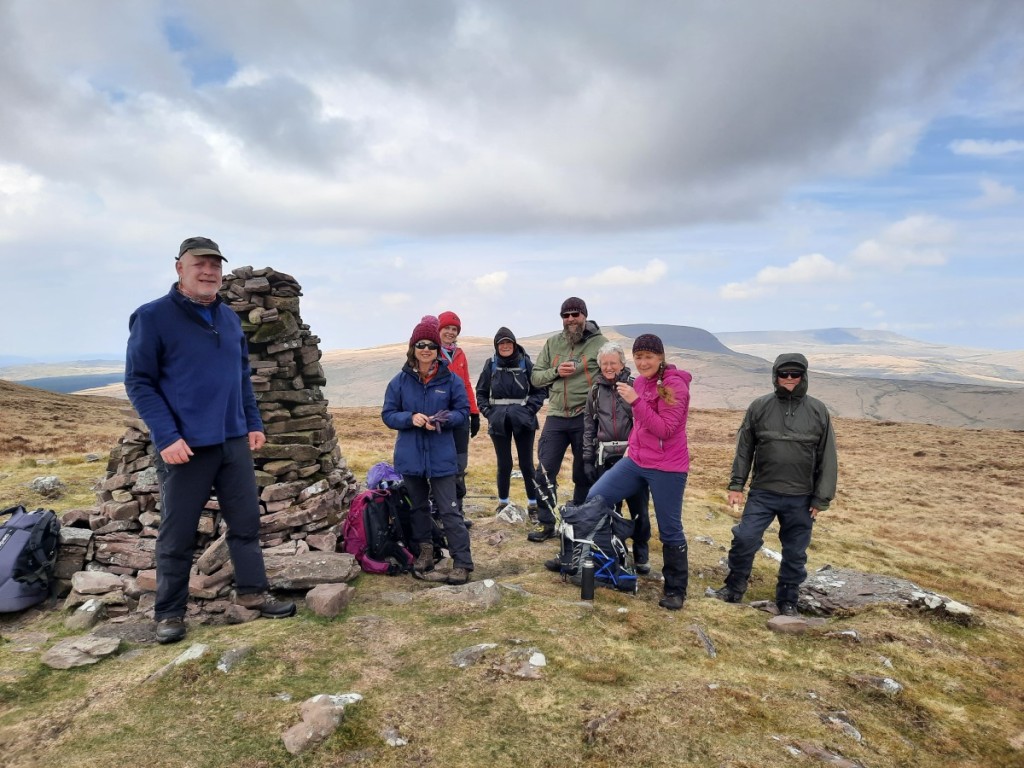
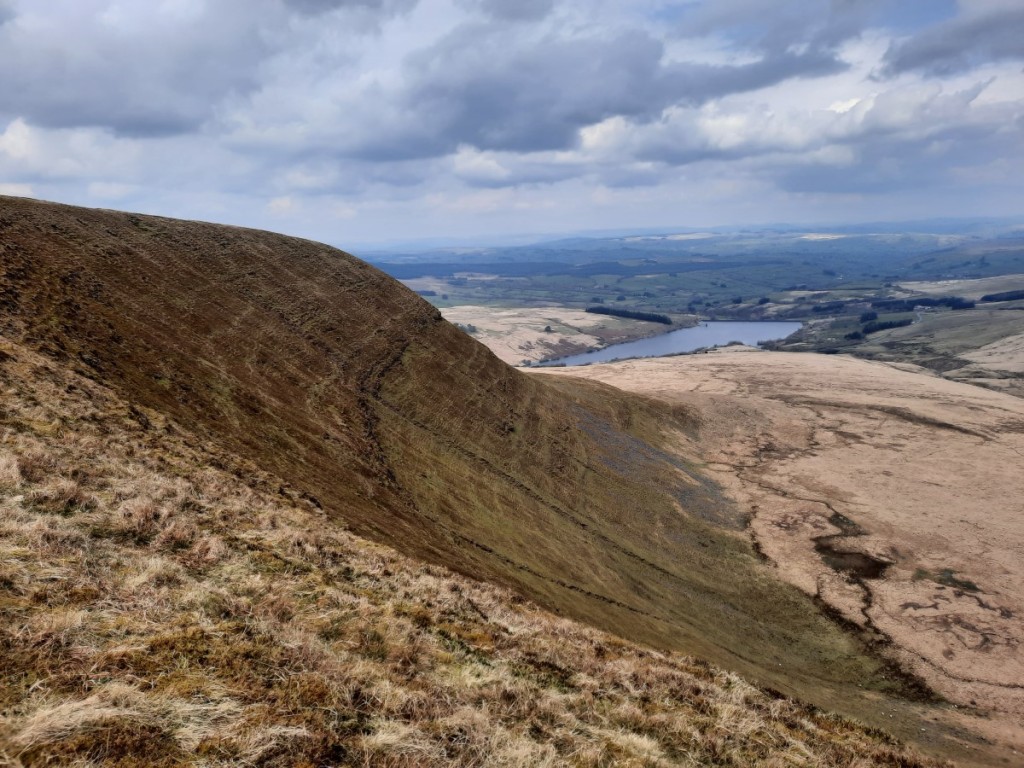


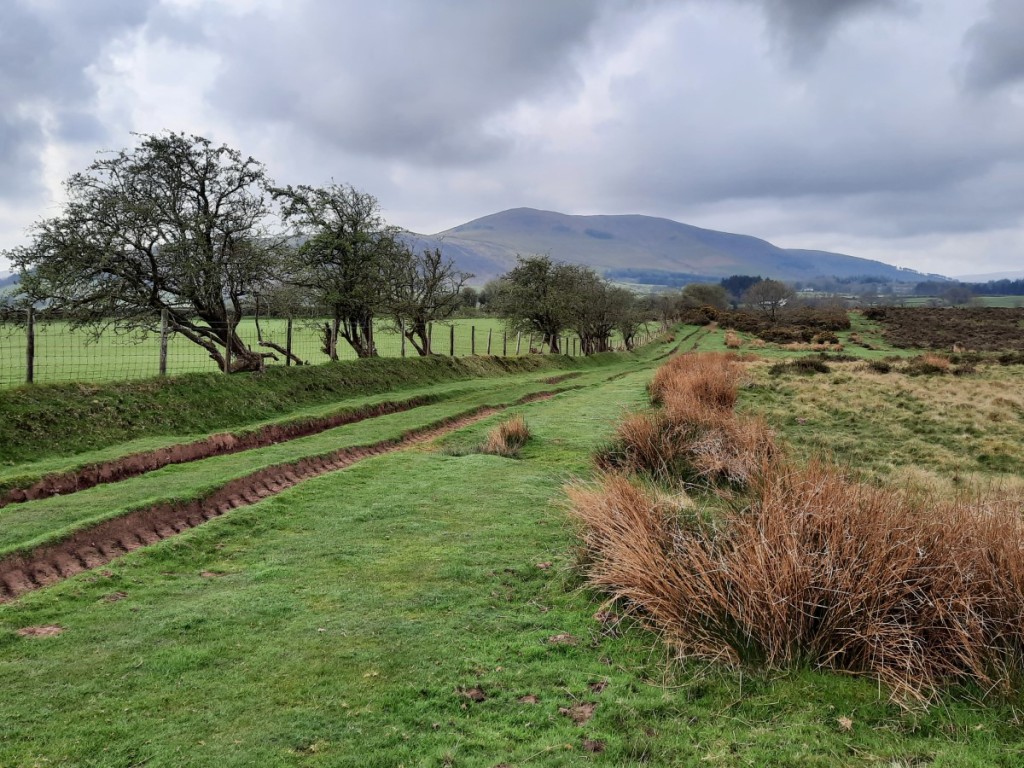
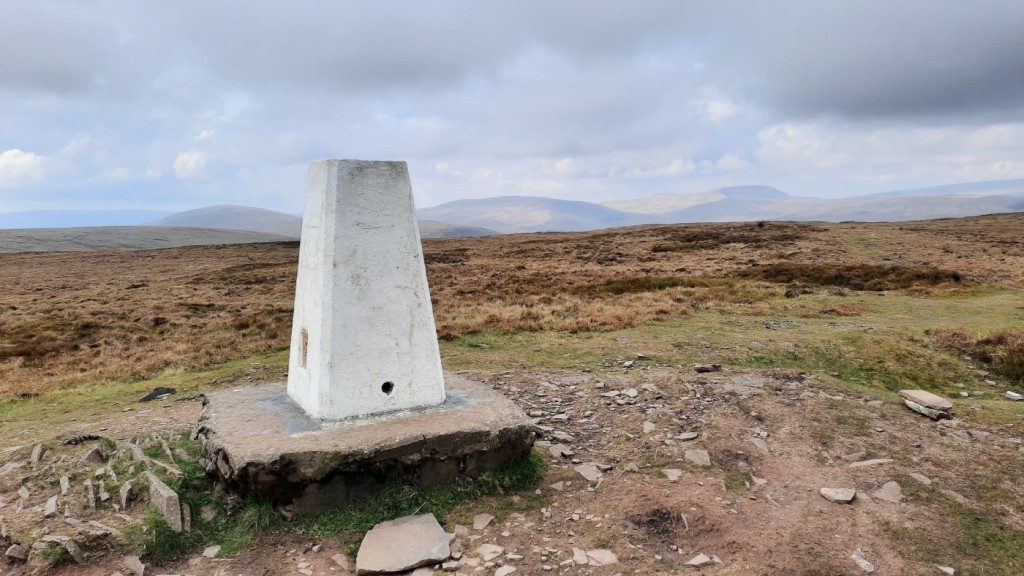
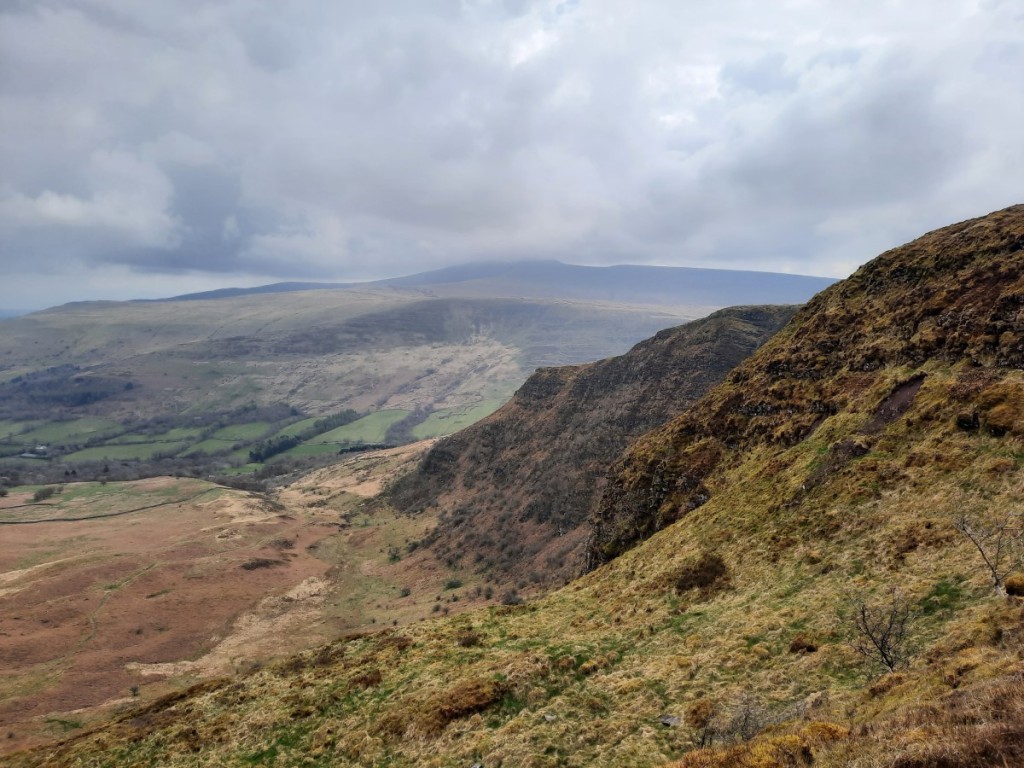
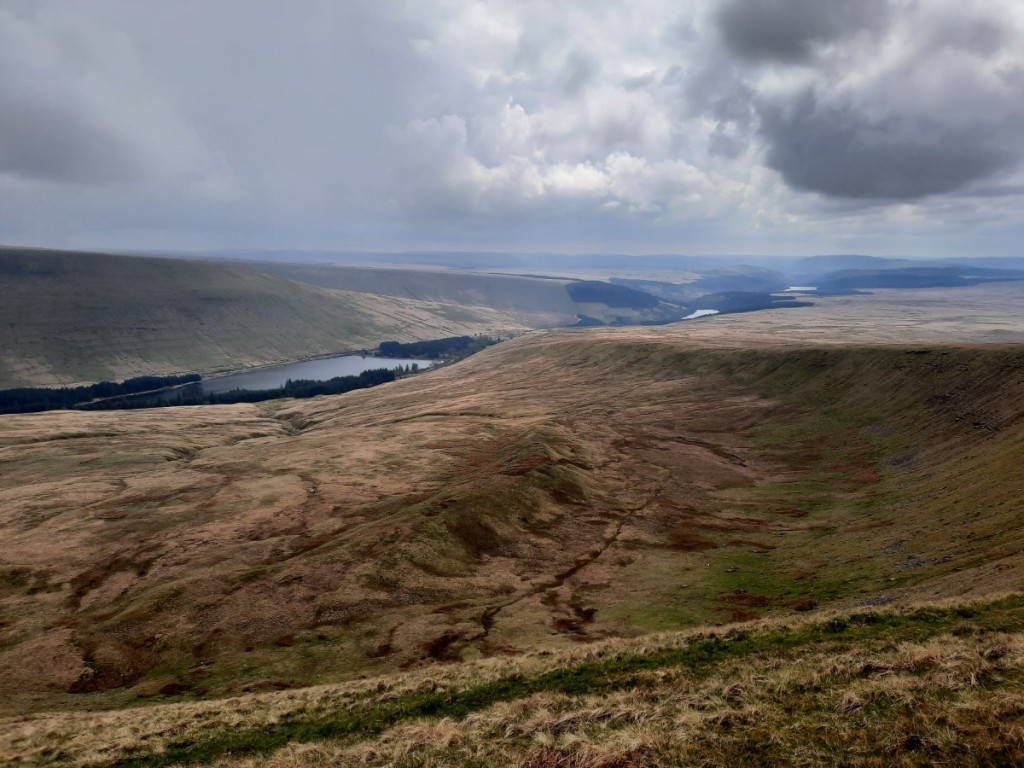
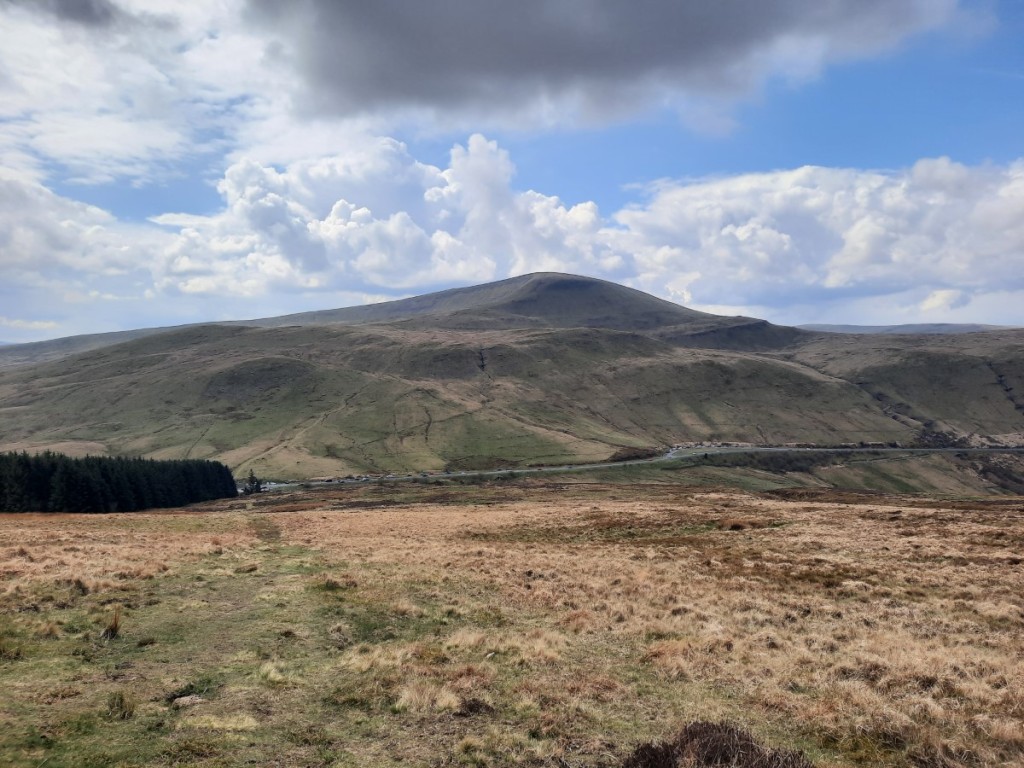
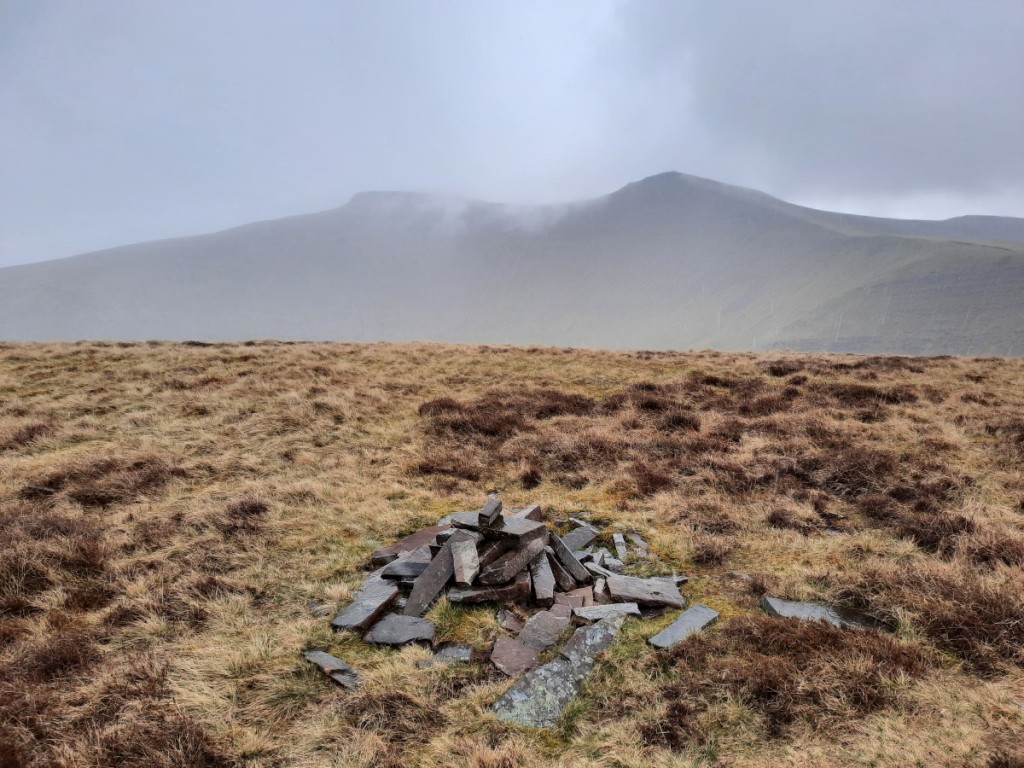
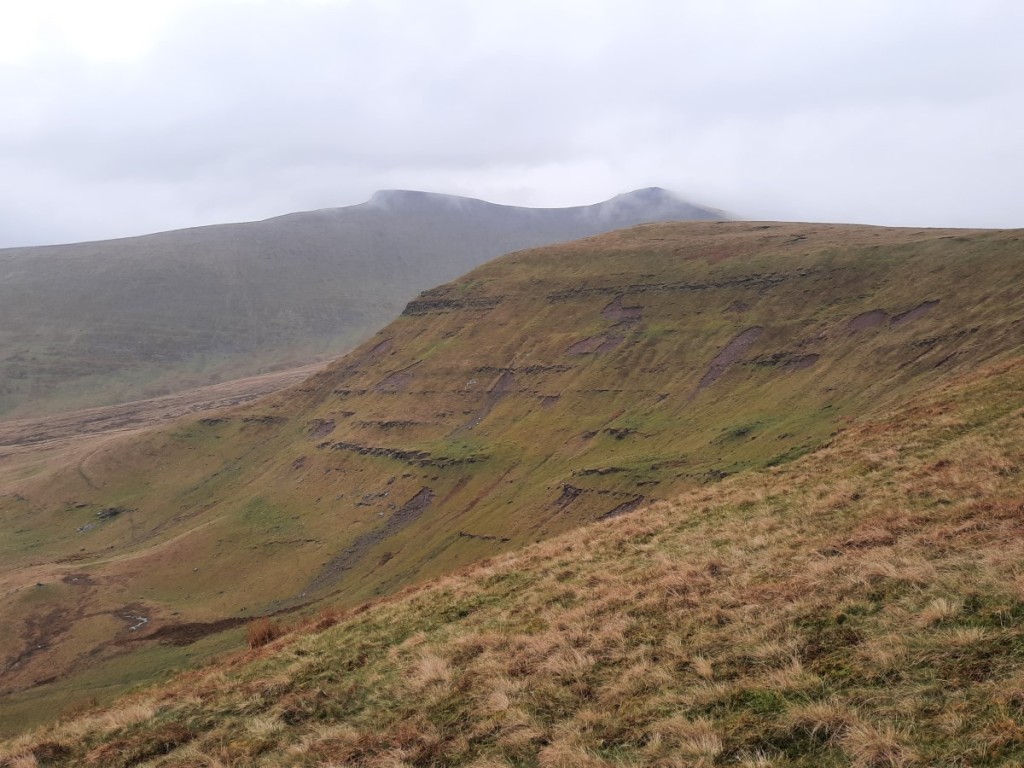


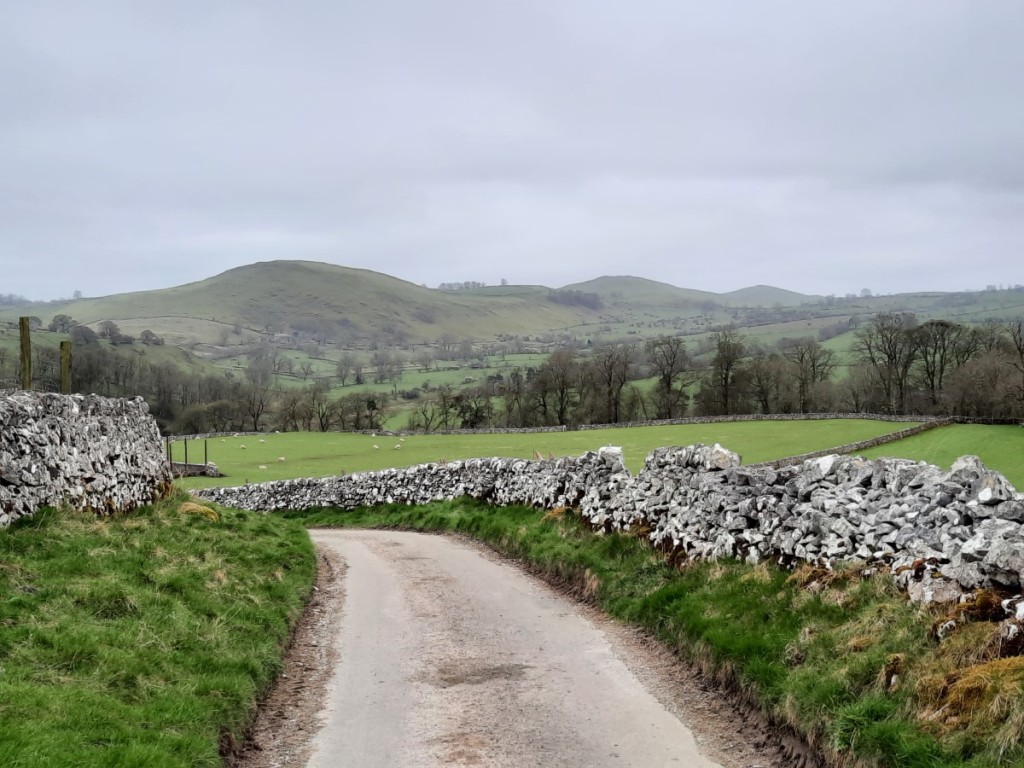
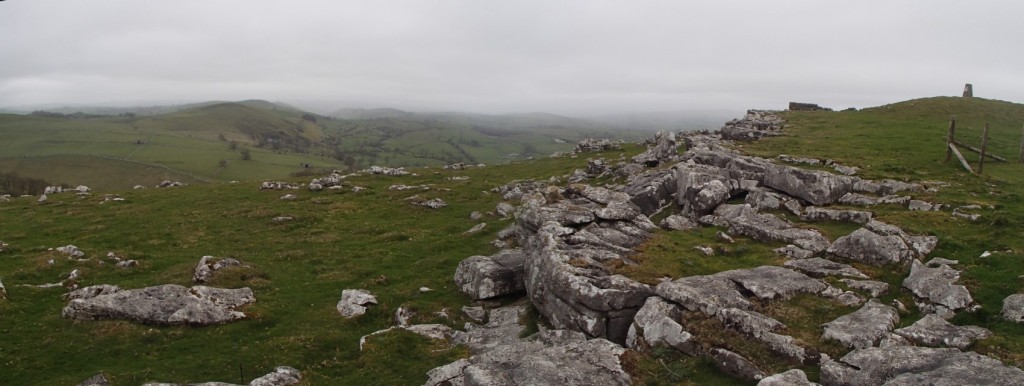


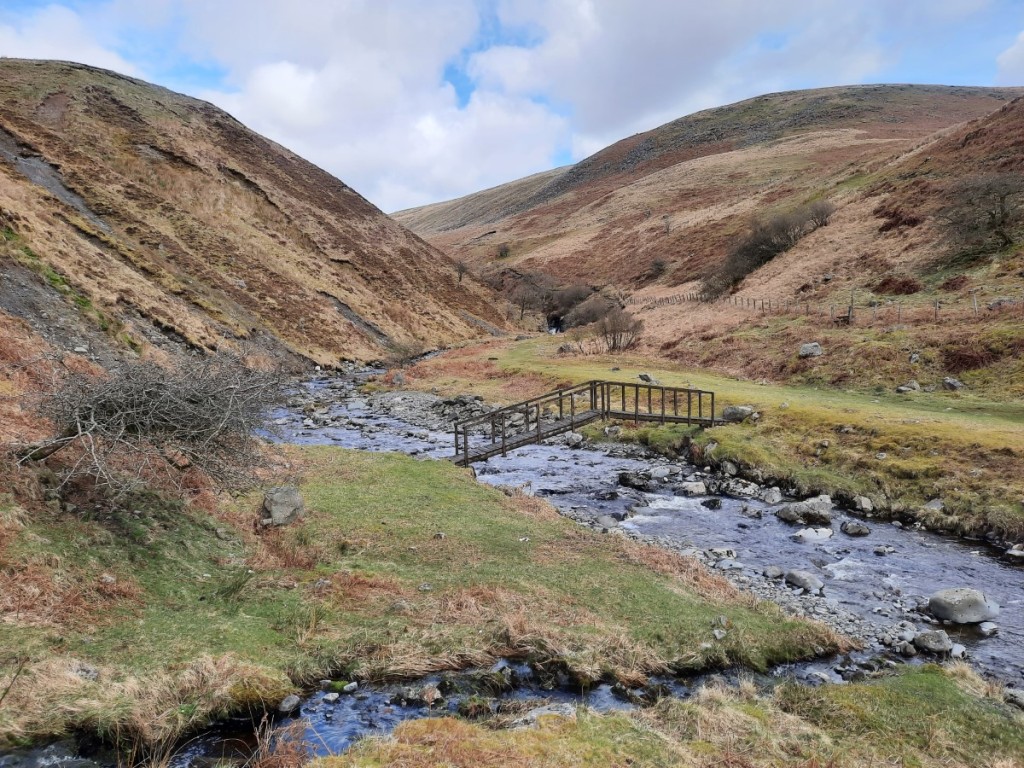

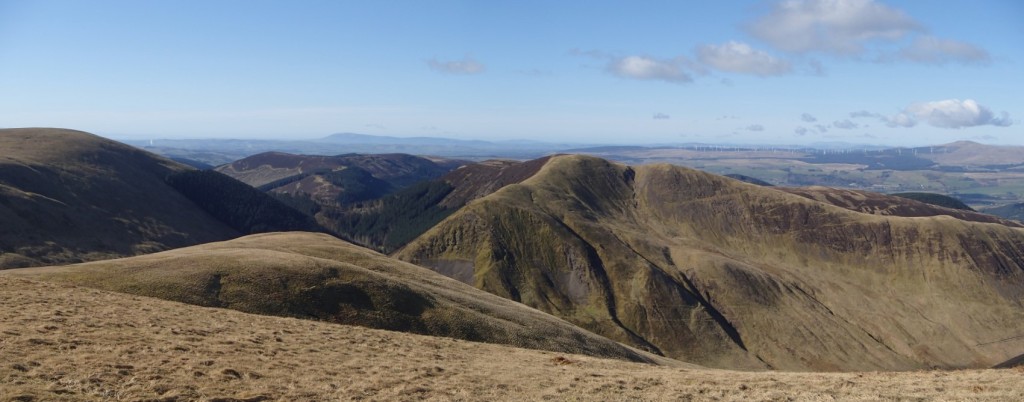


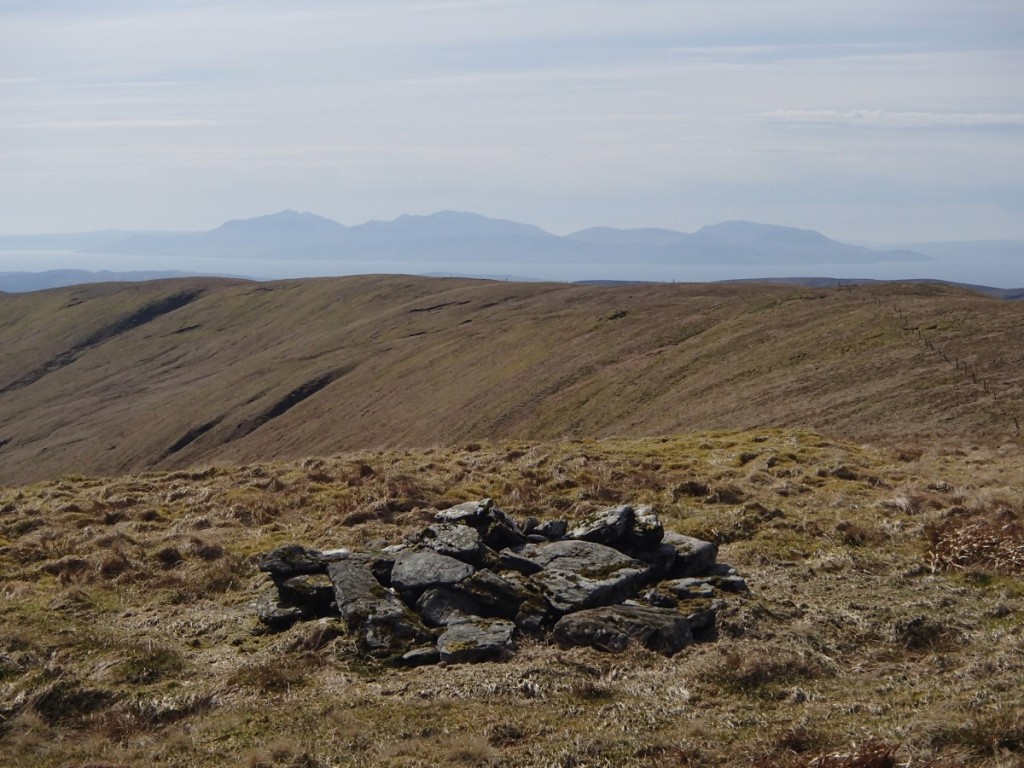


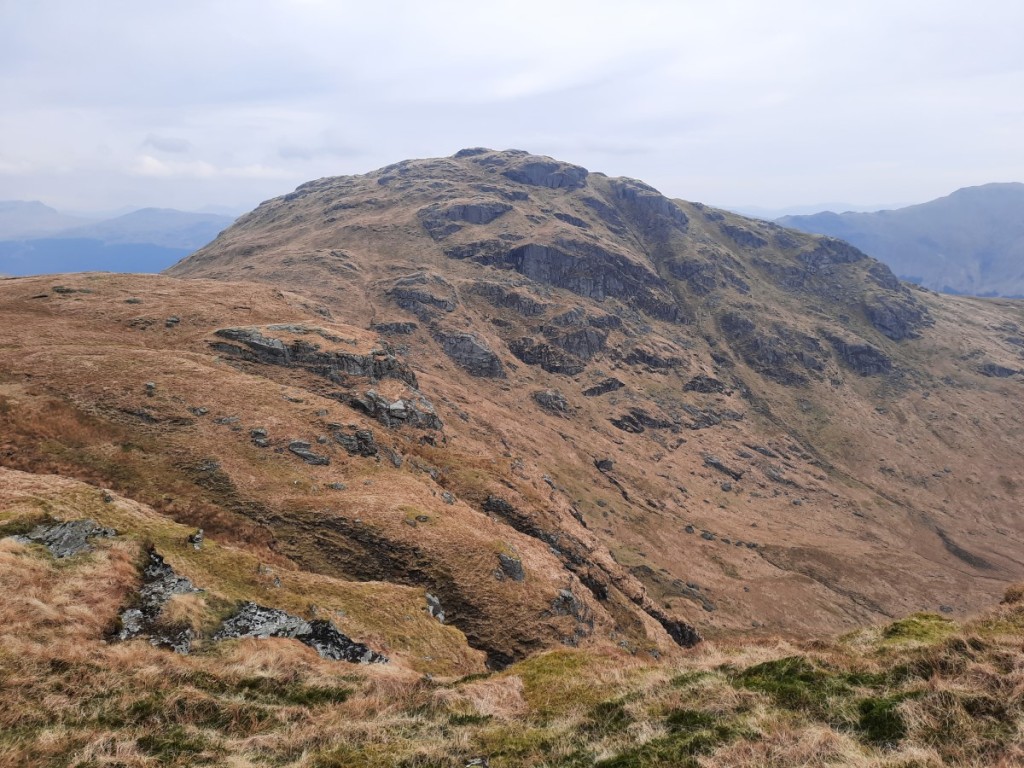

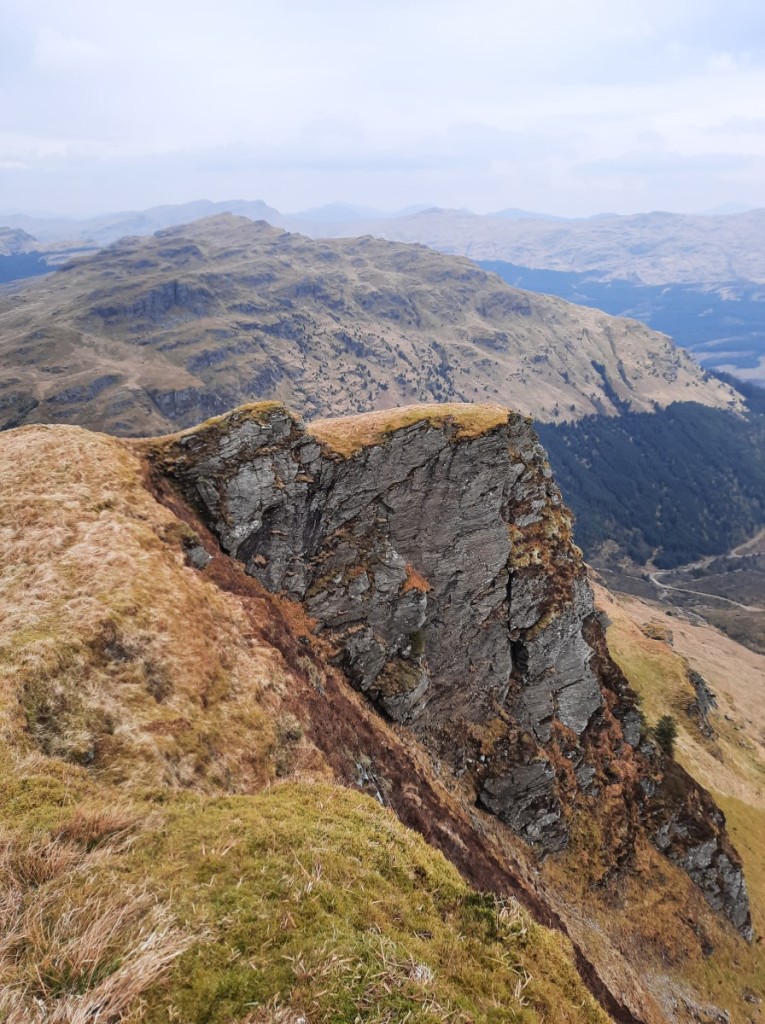
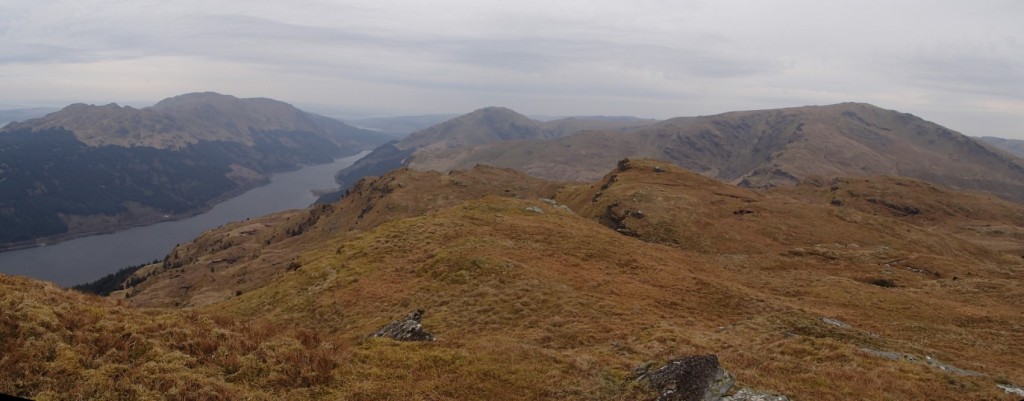


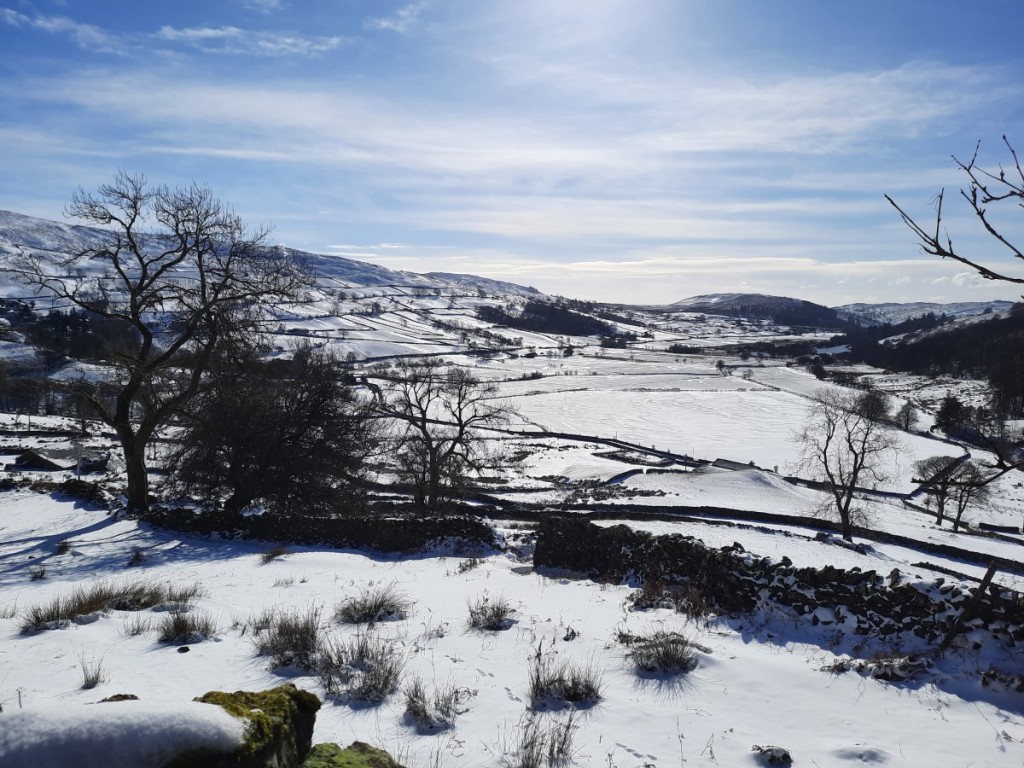
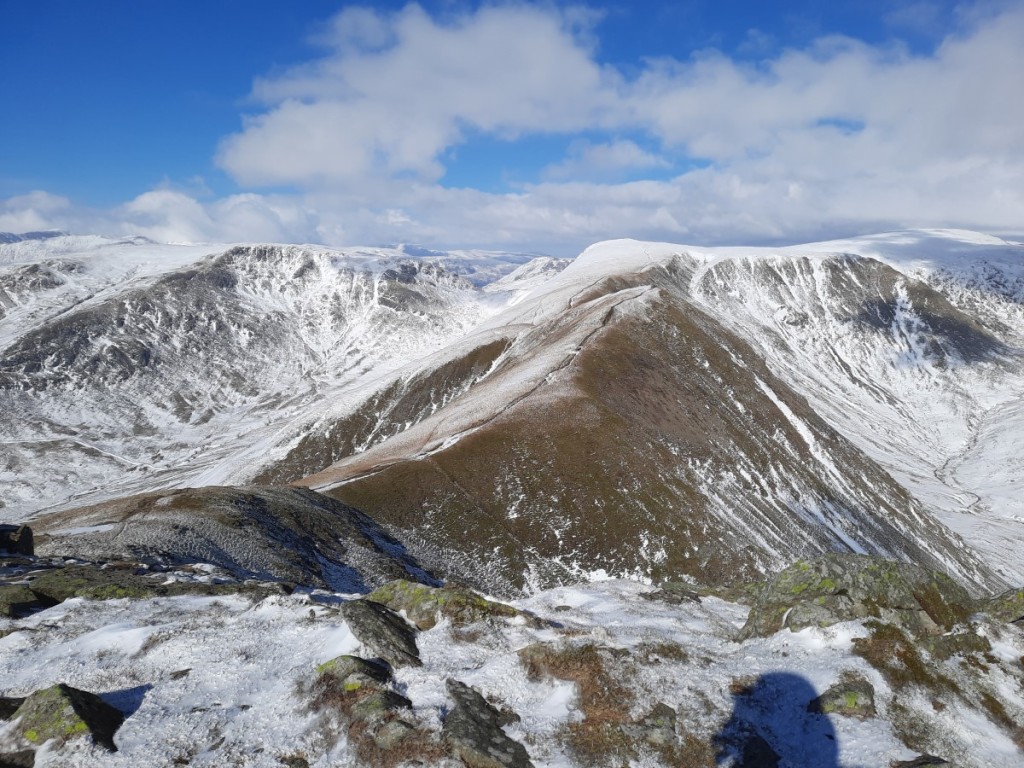
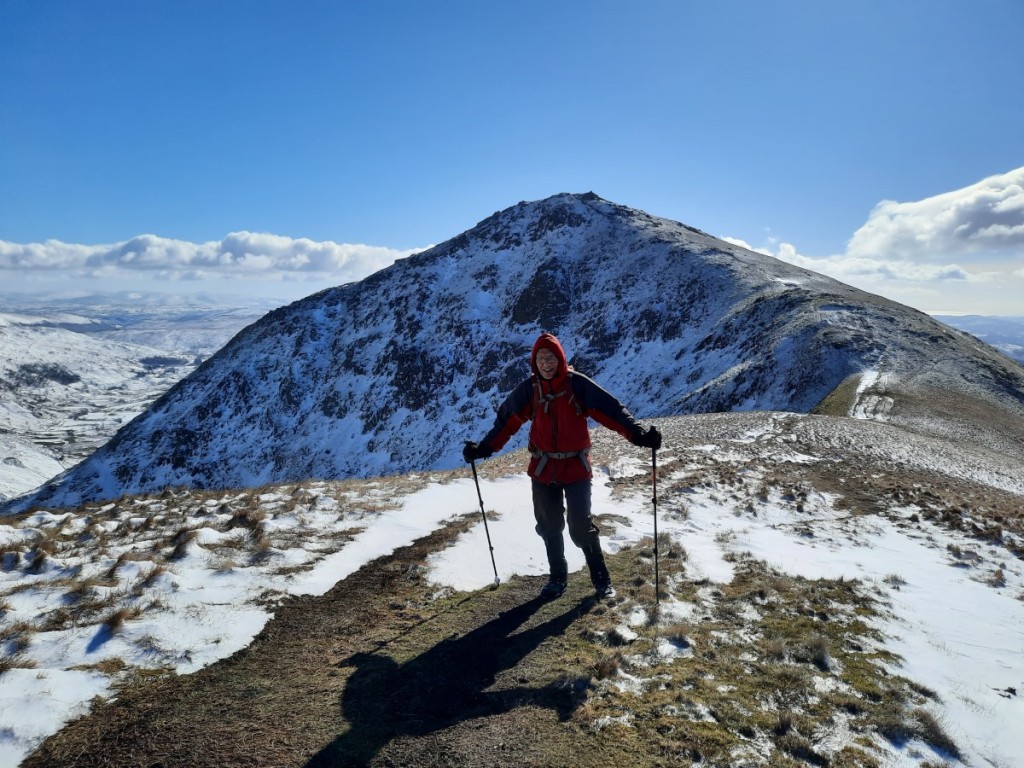


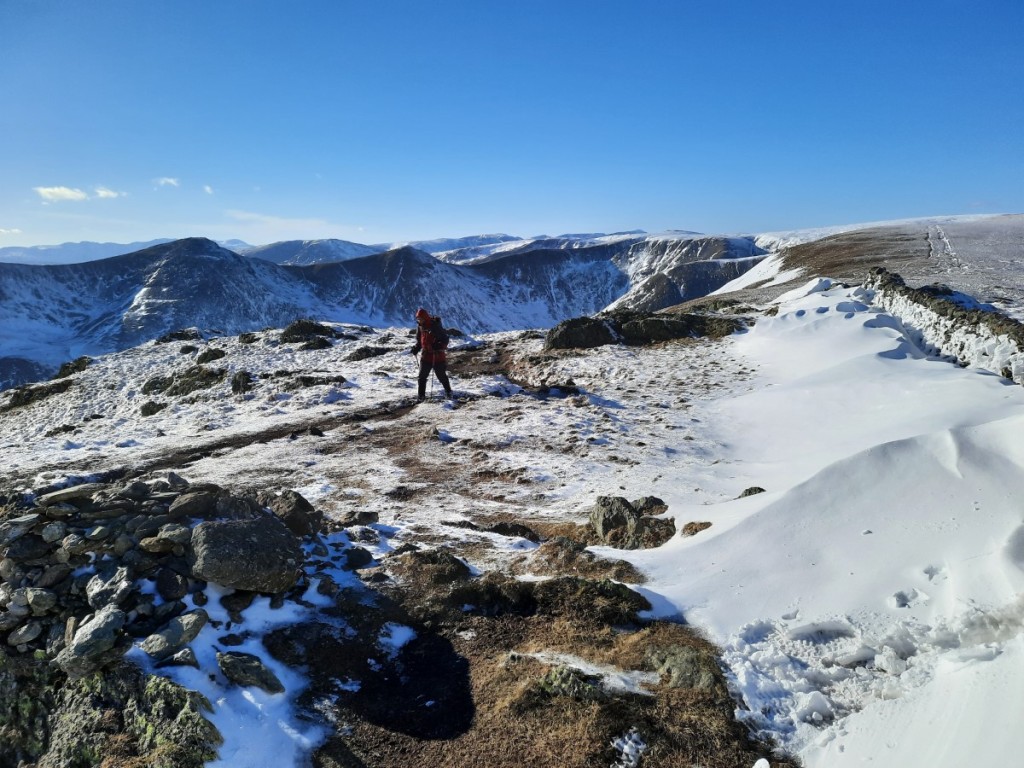


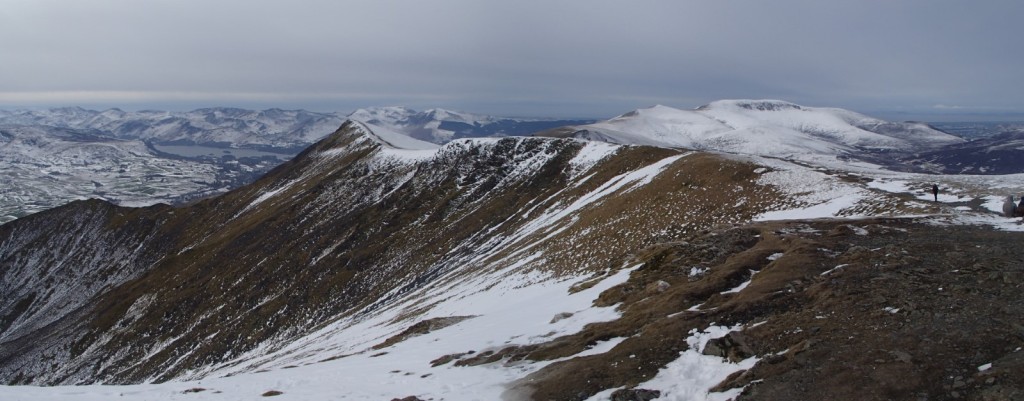


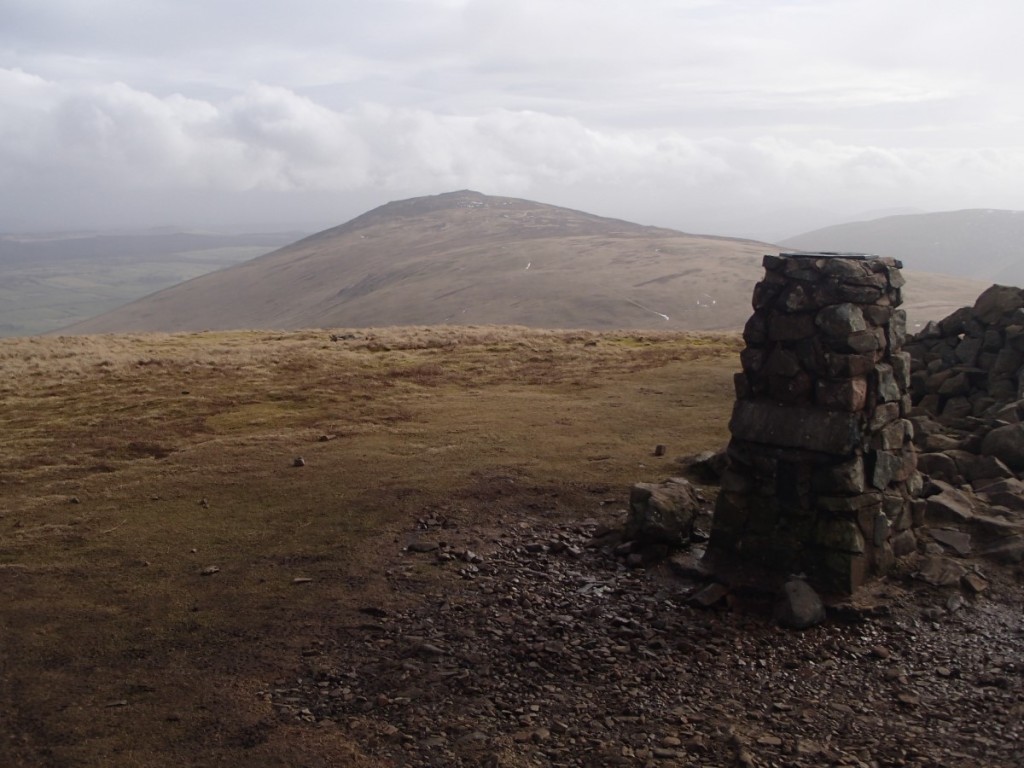

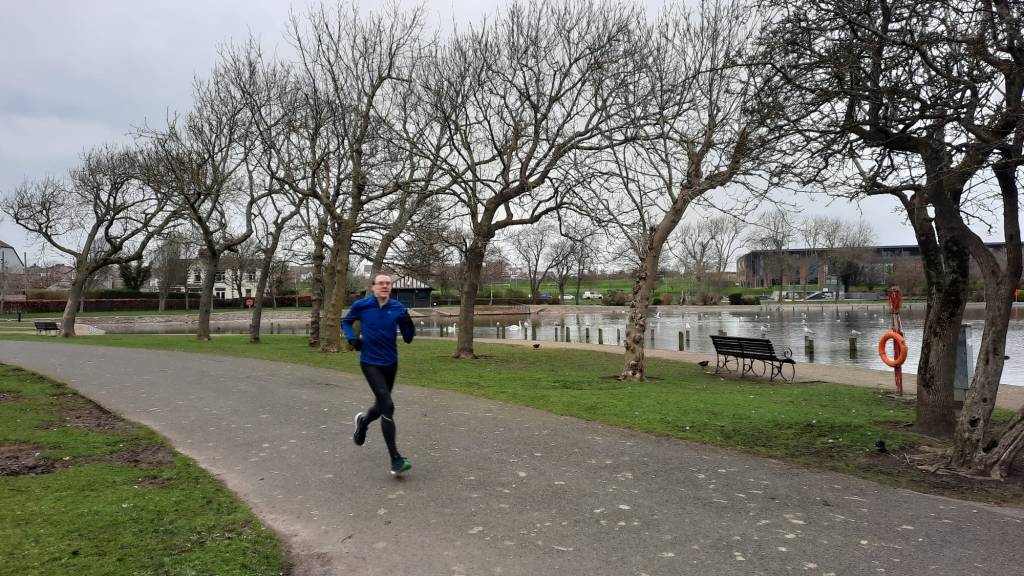


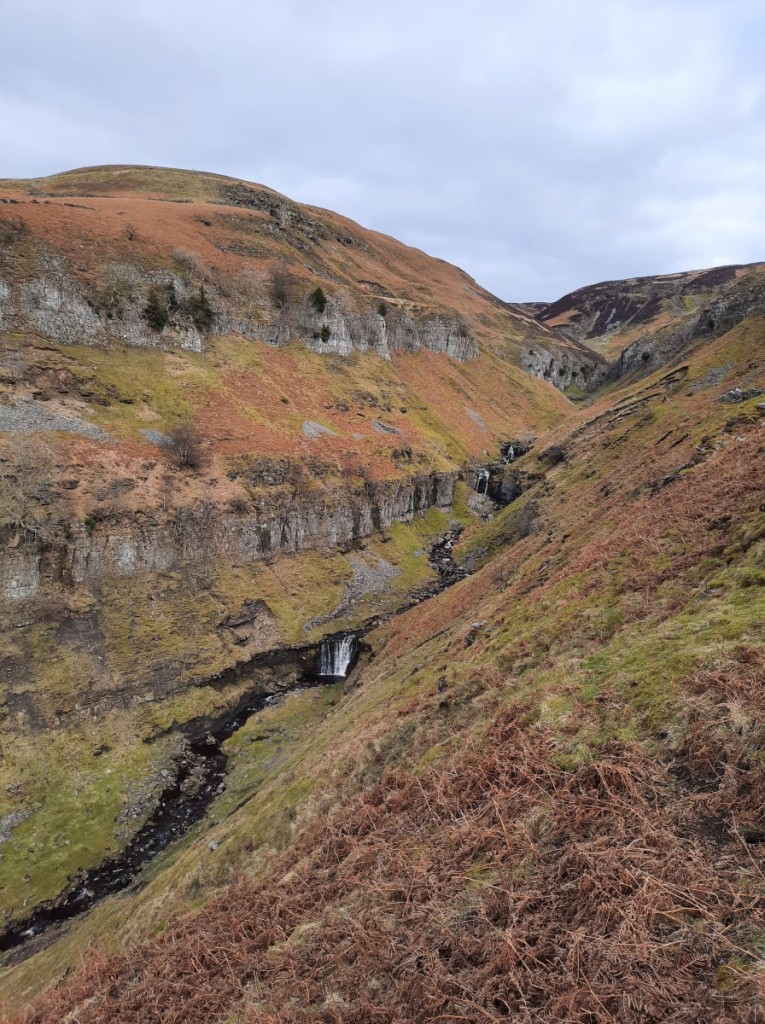
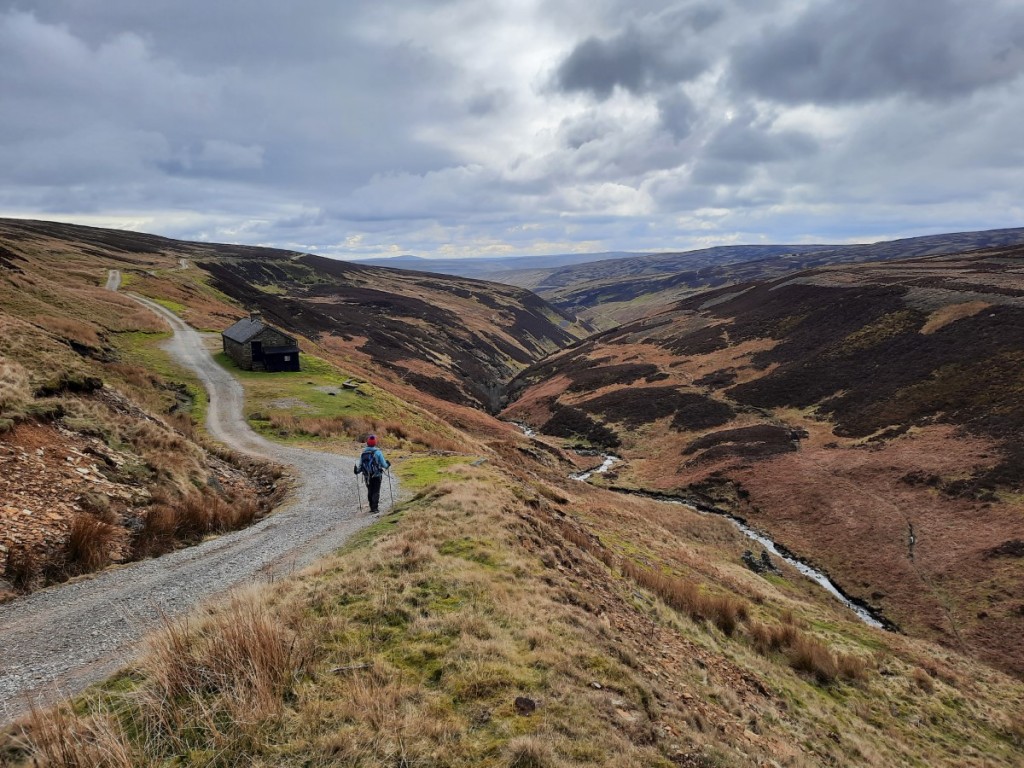

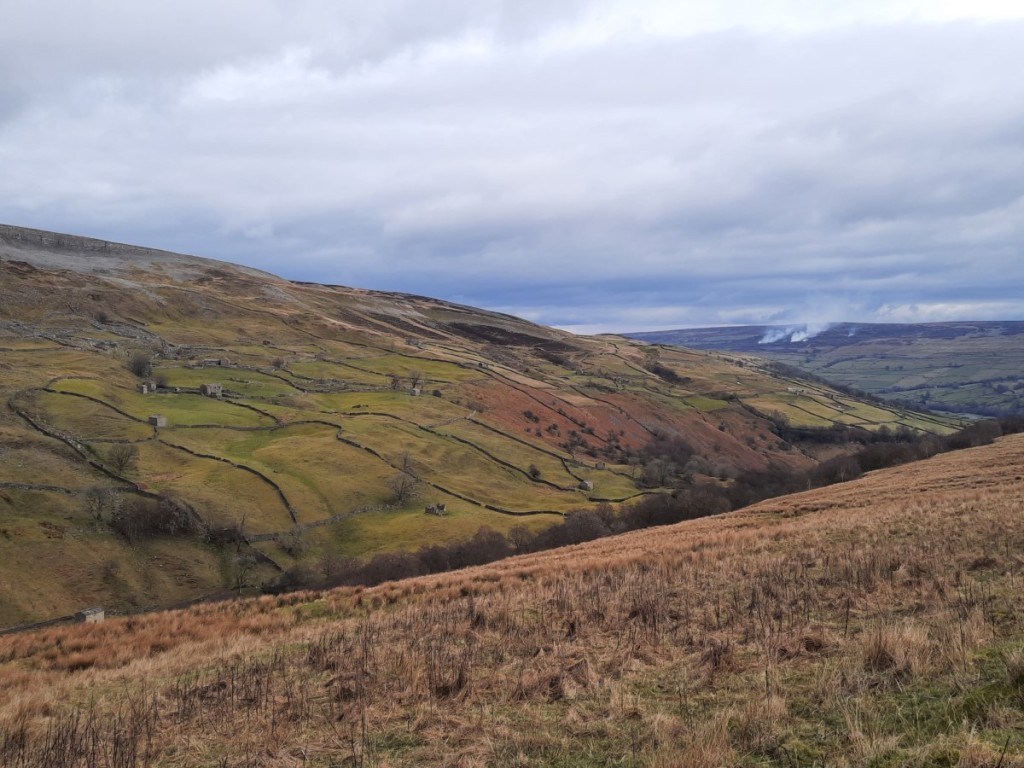
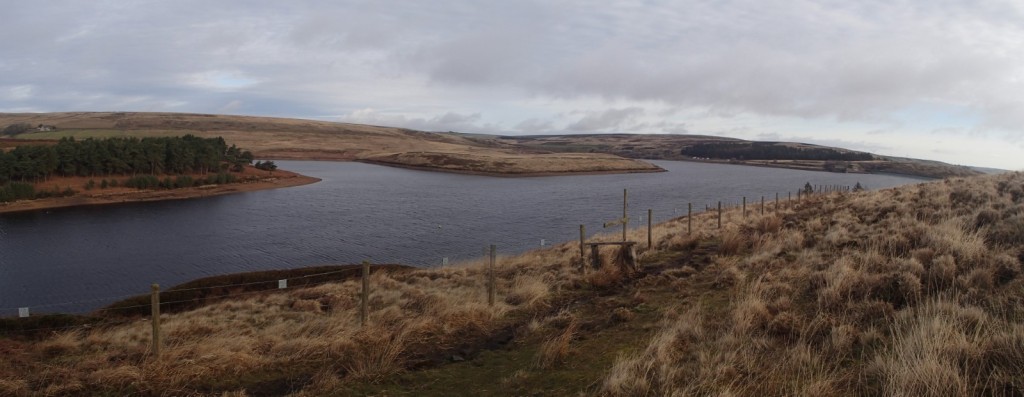

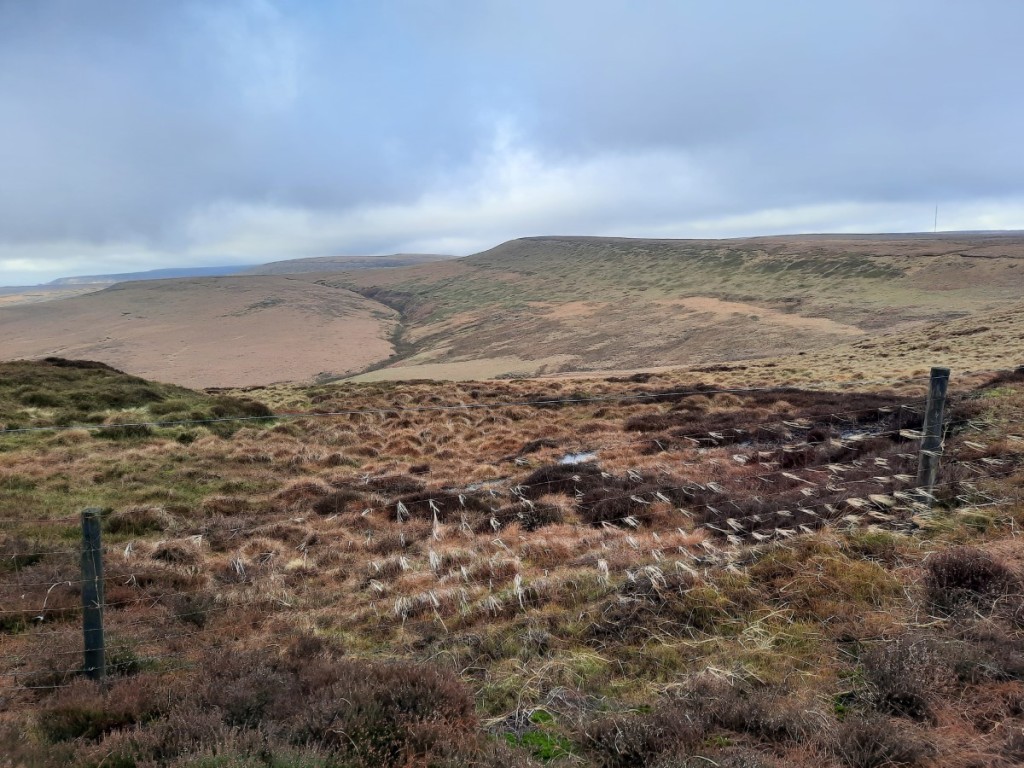

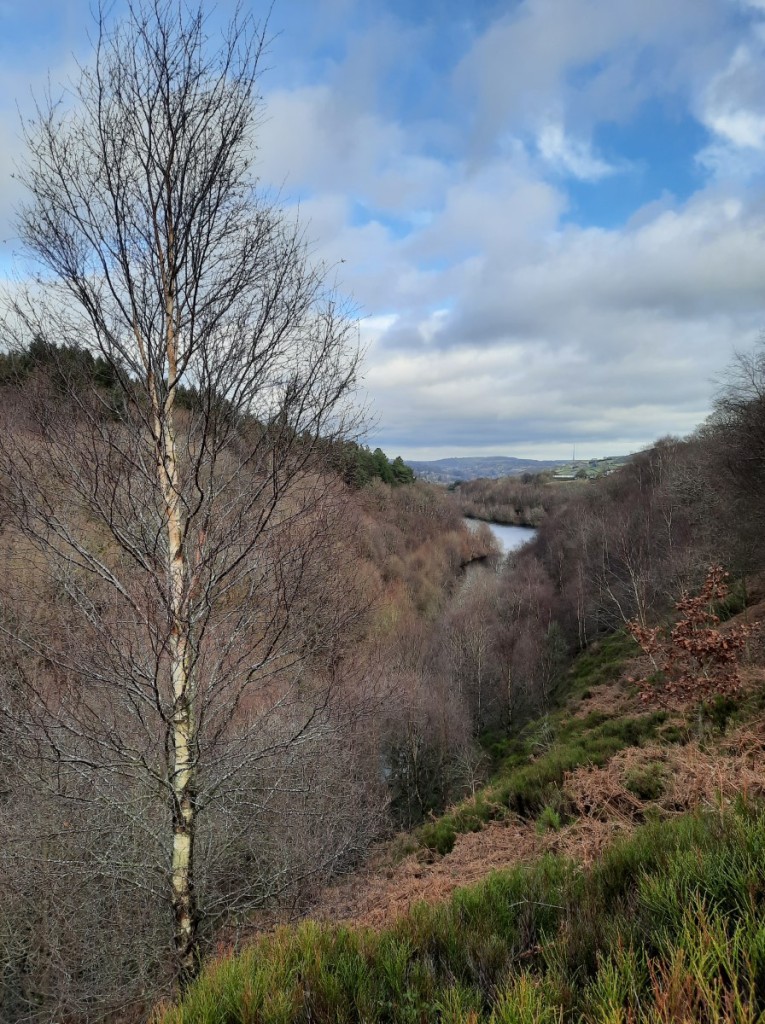

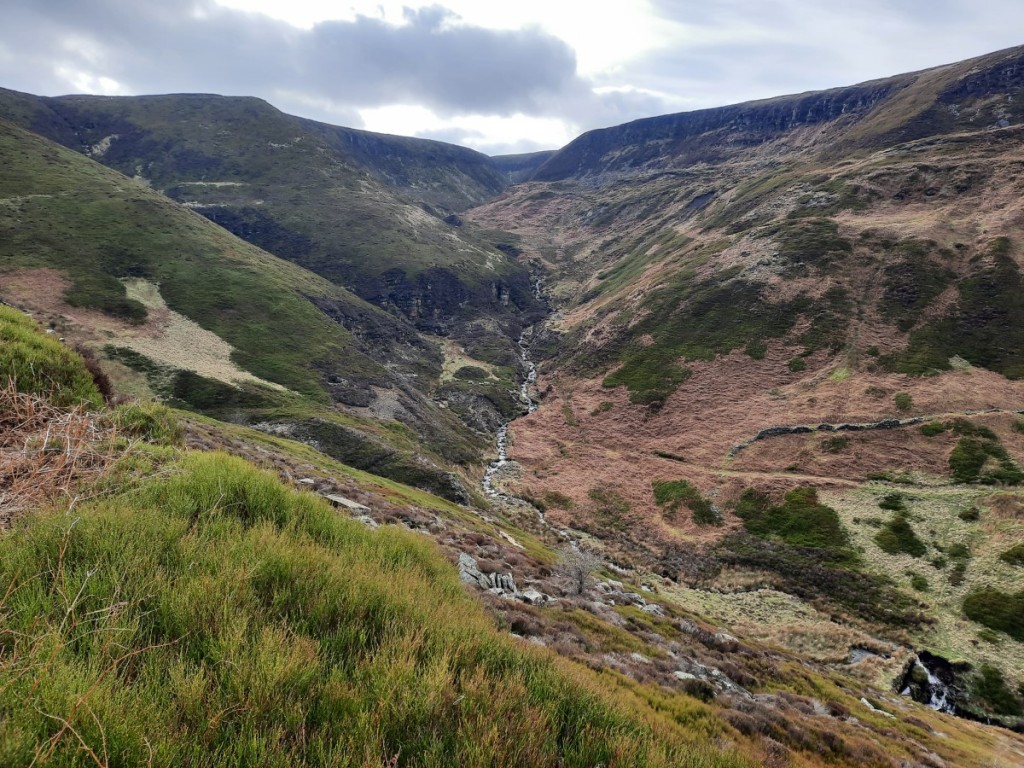


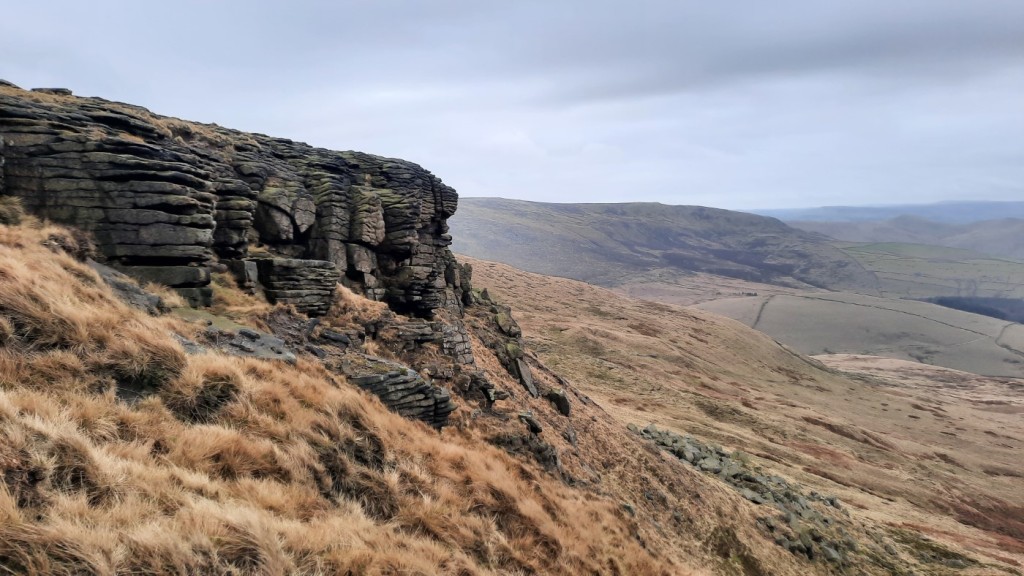
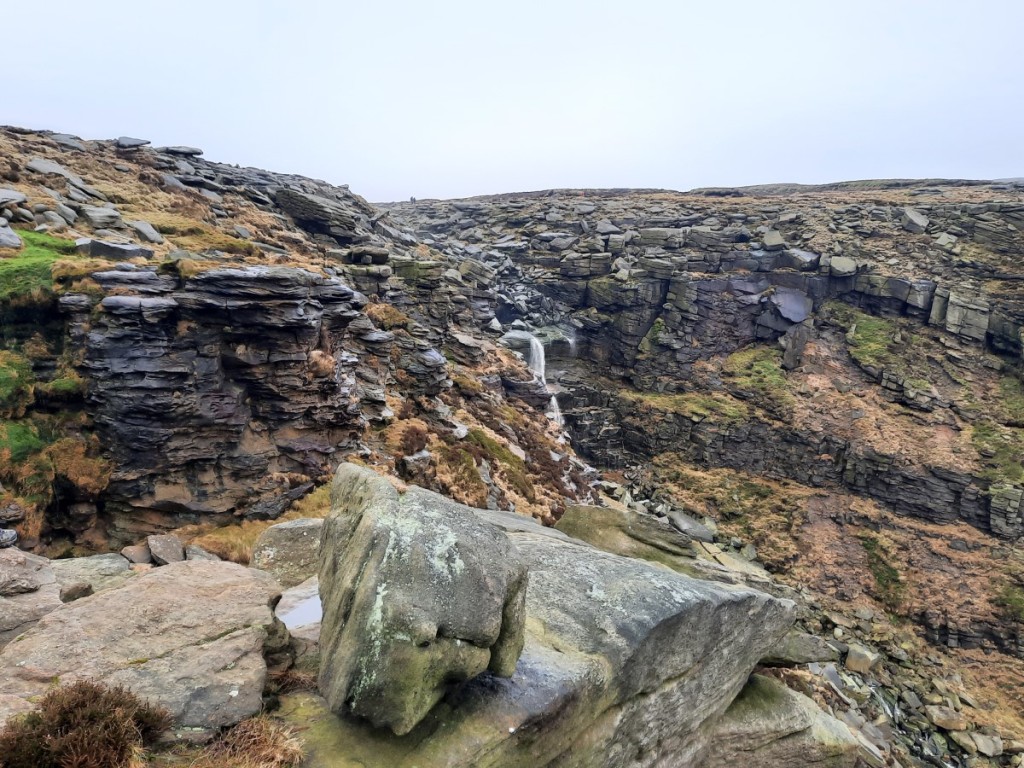
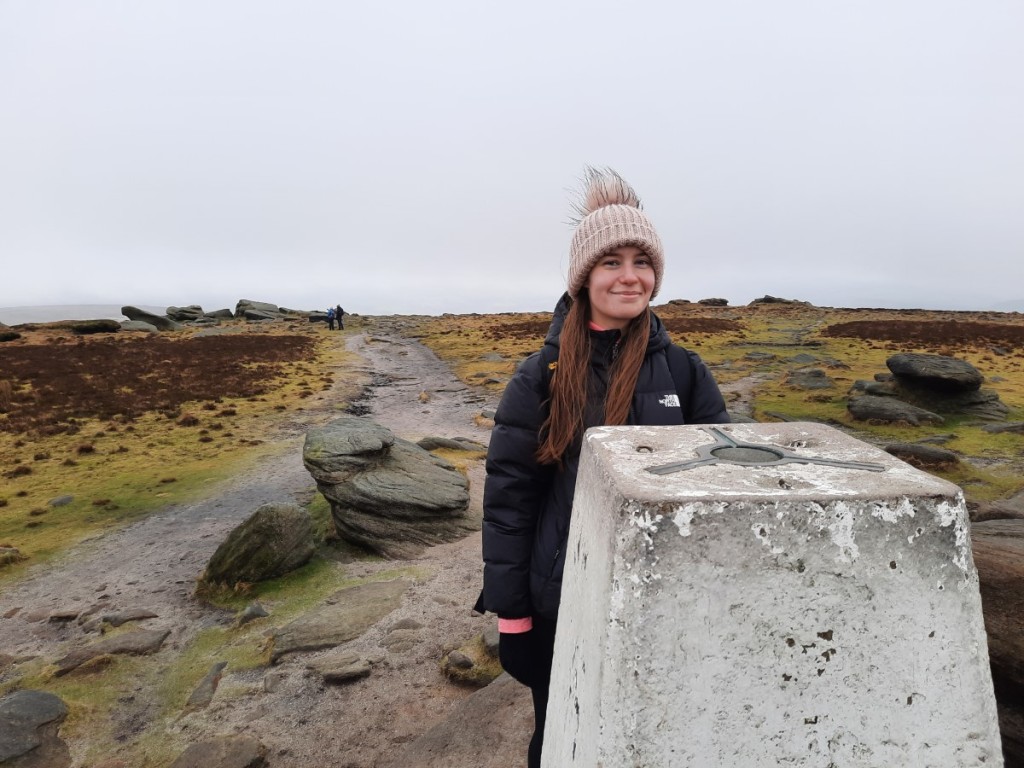


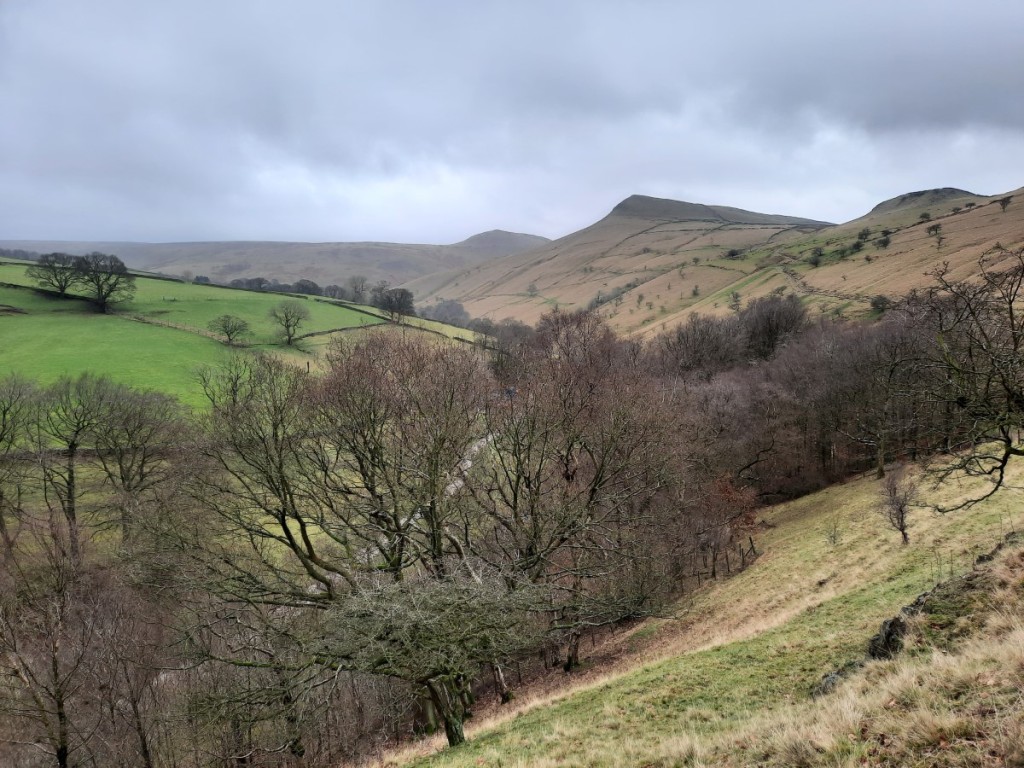
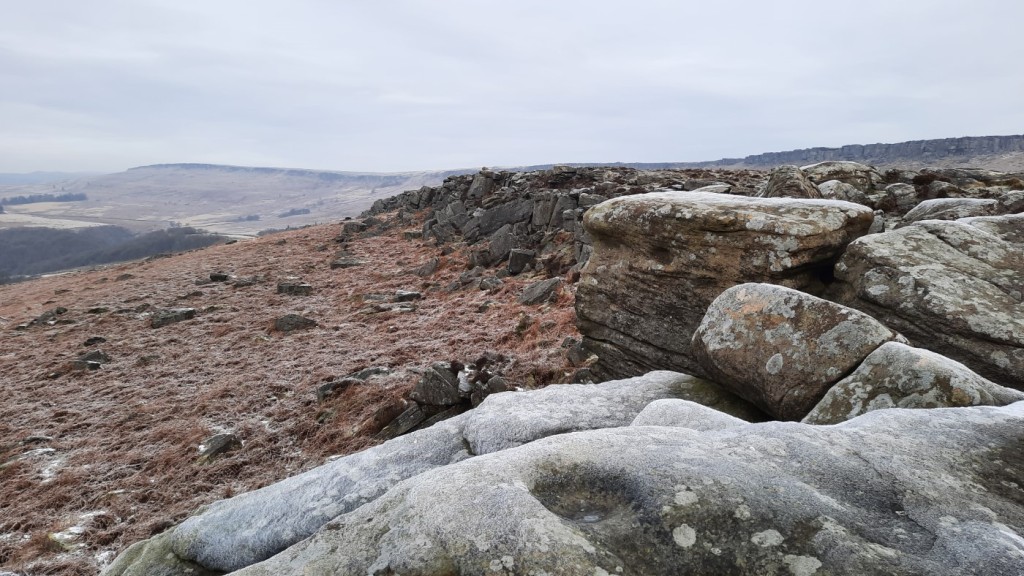


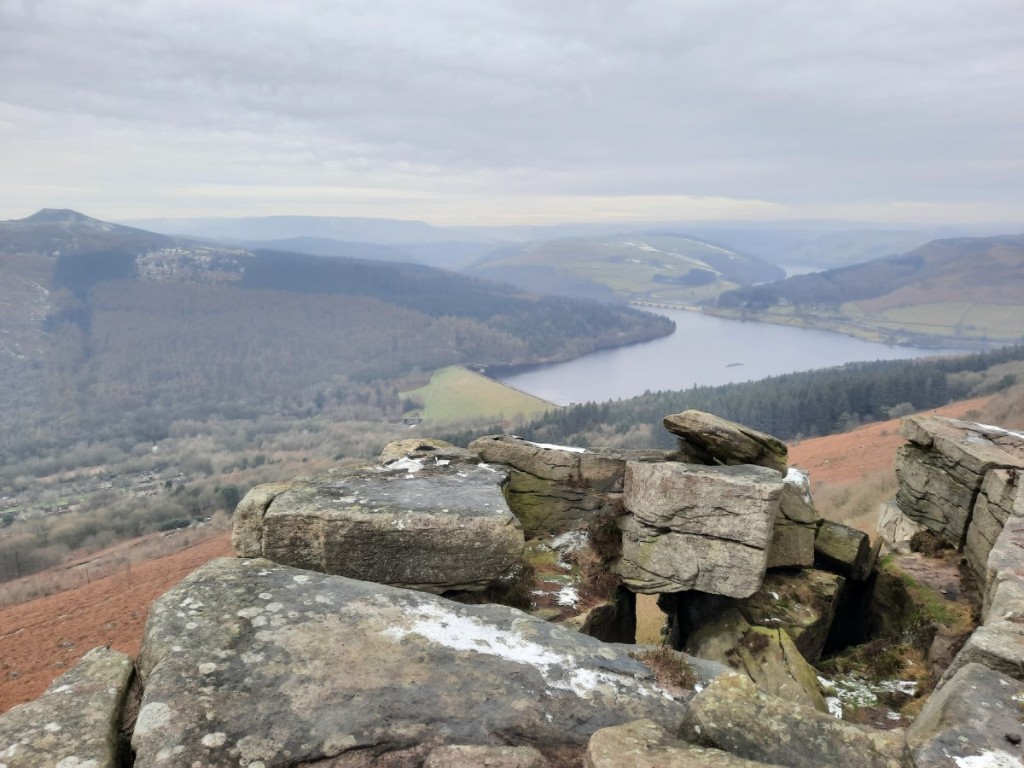

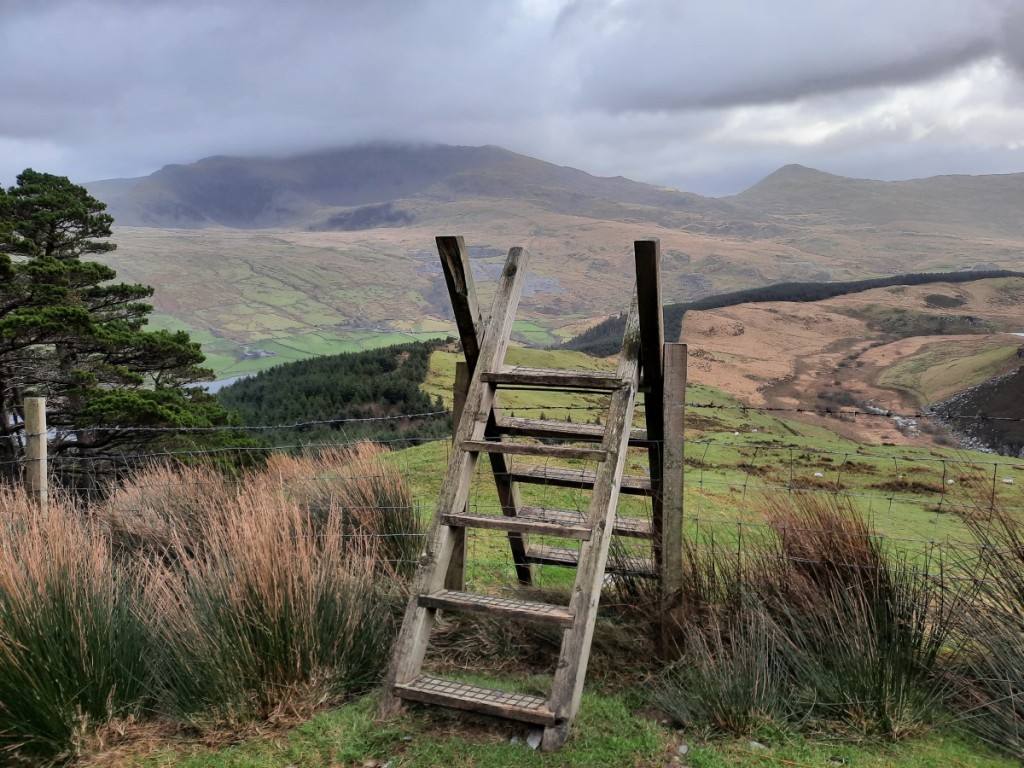
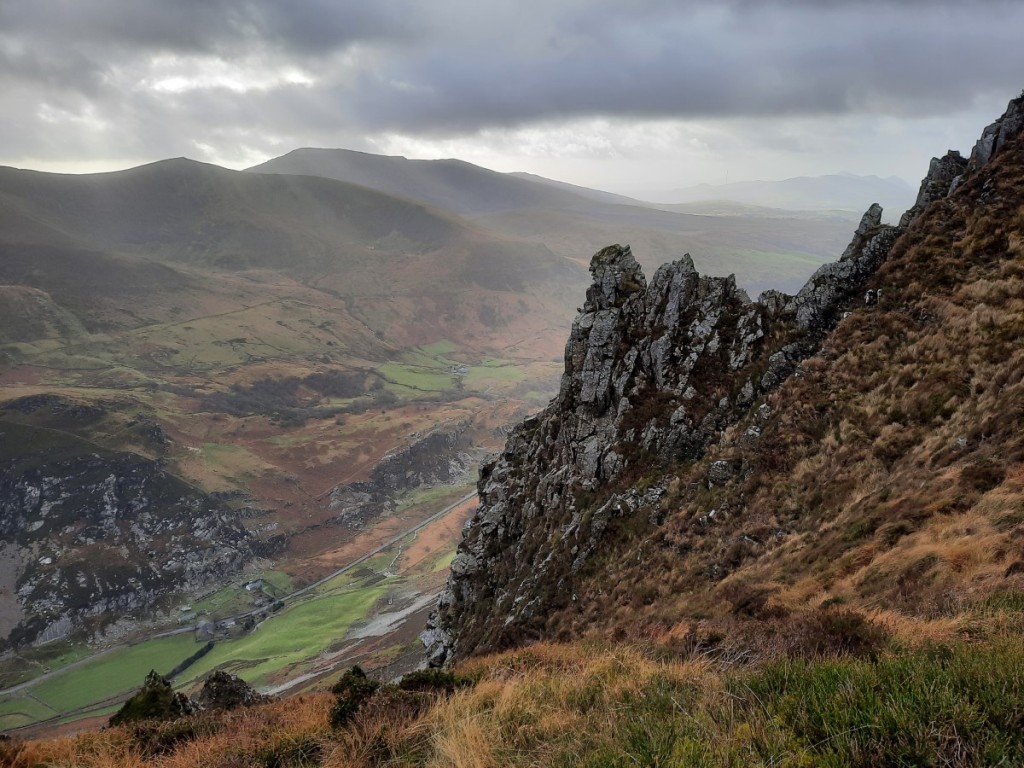


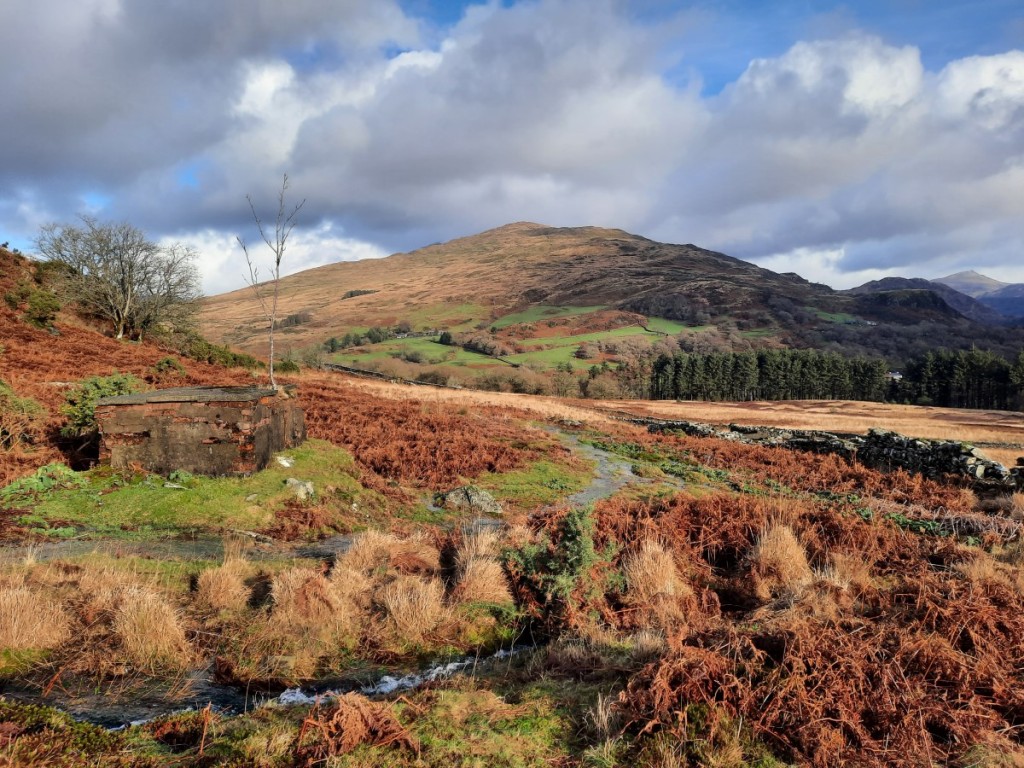
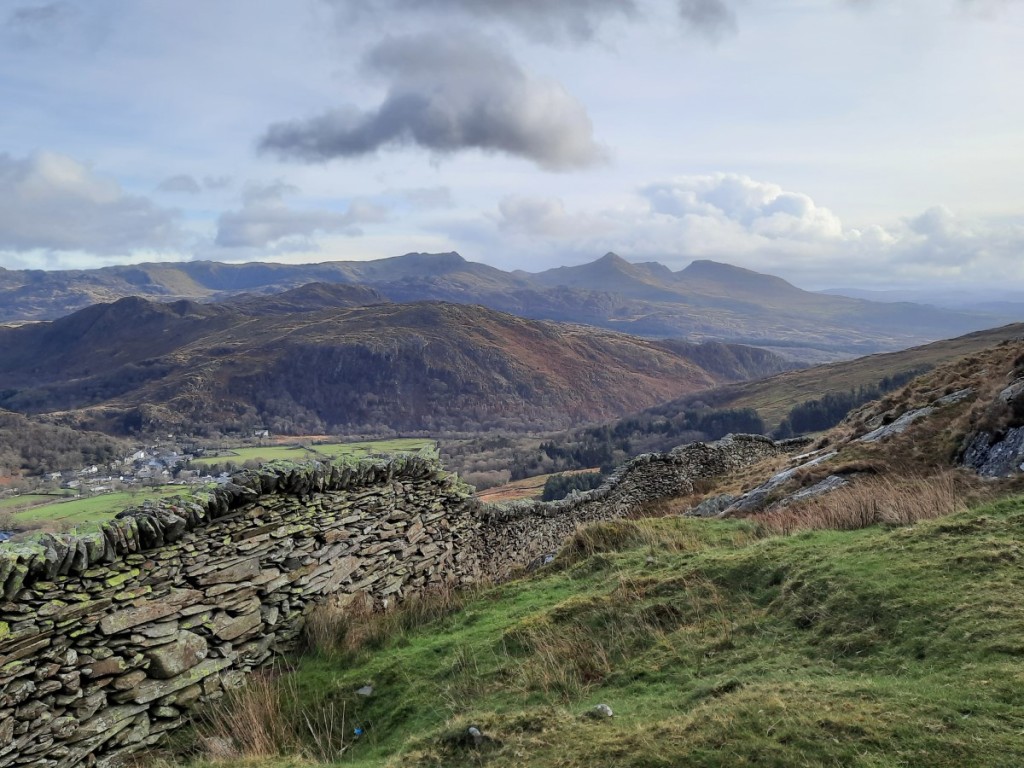


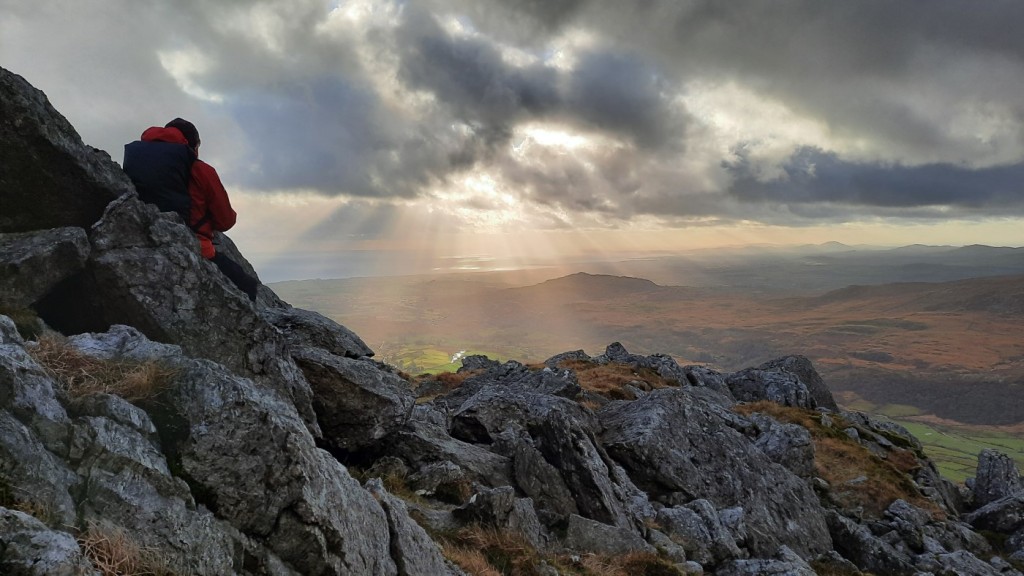
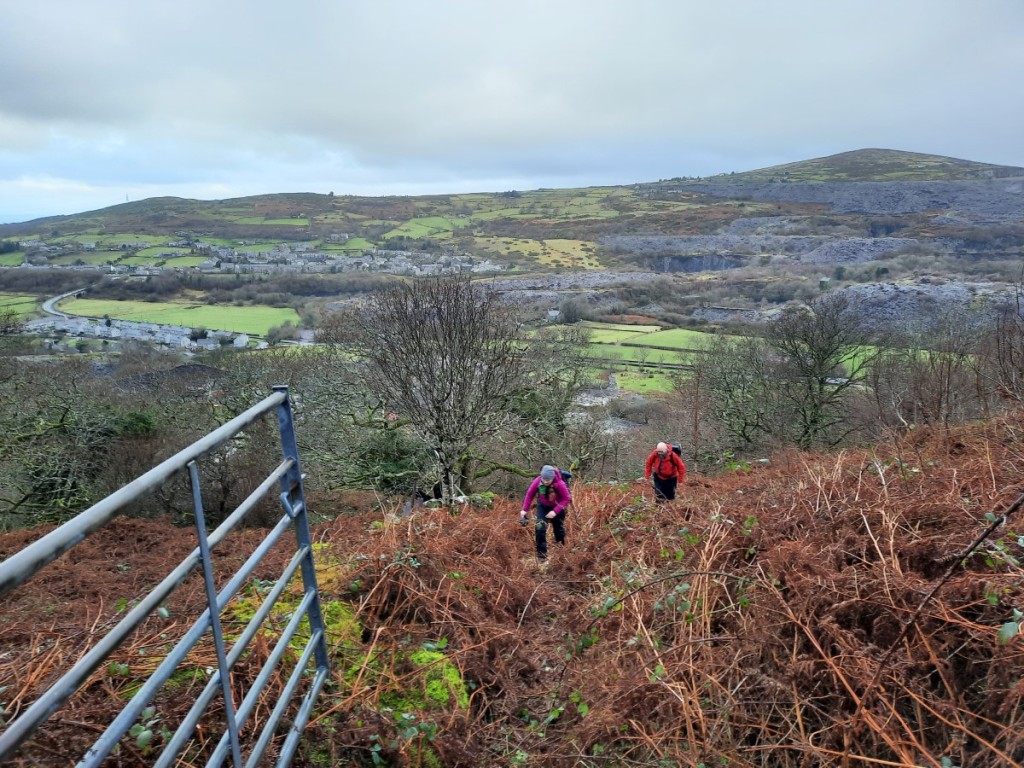


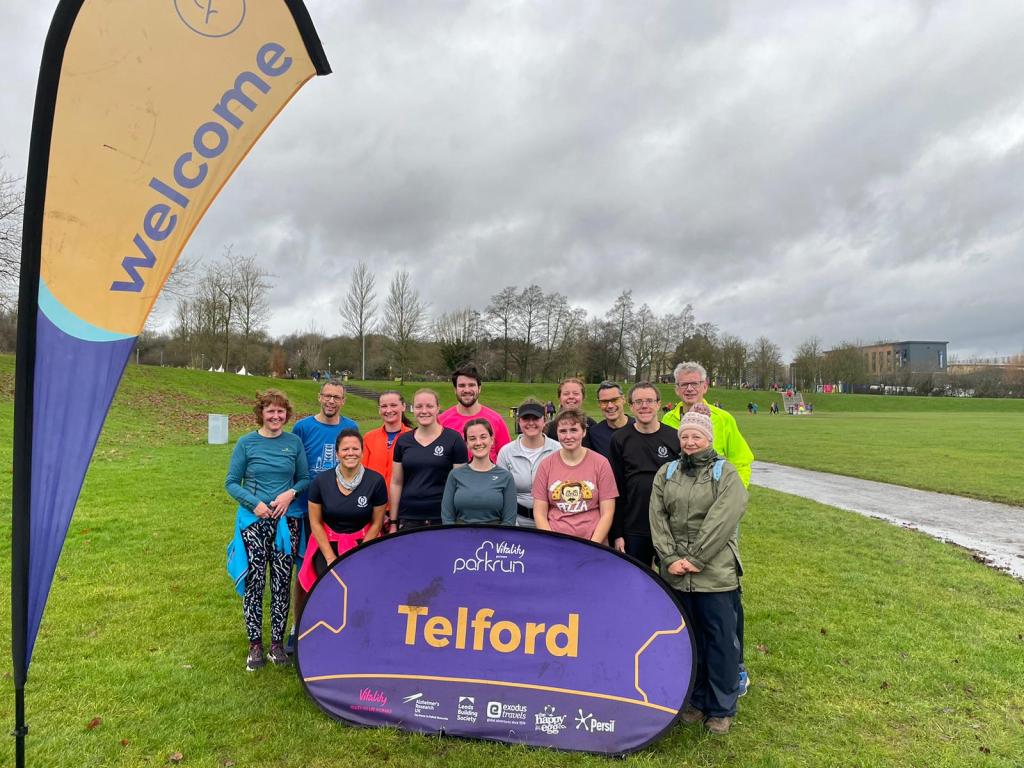


 David Pettit's photo blog